Bu Xuekuan – A Lifetime in Xingyi Quan
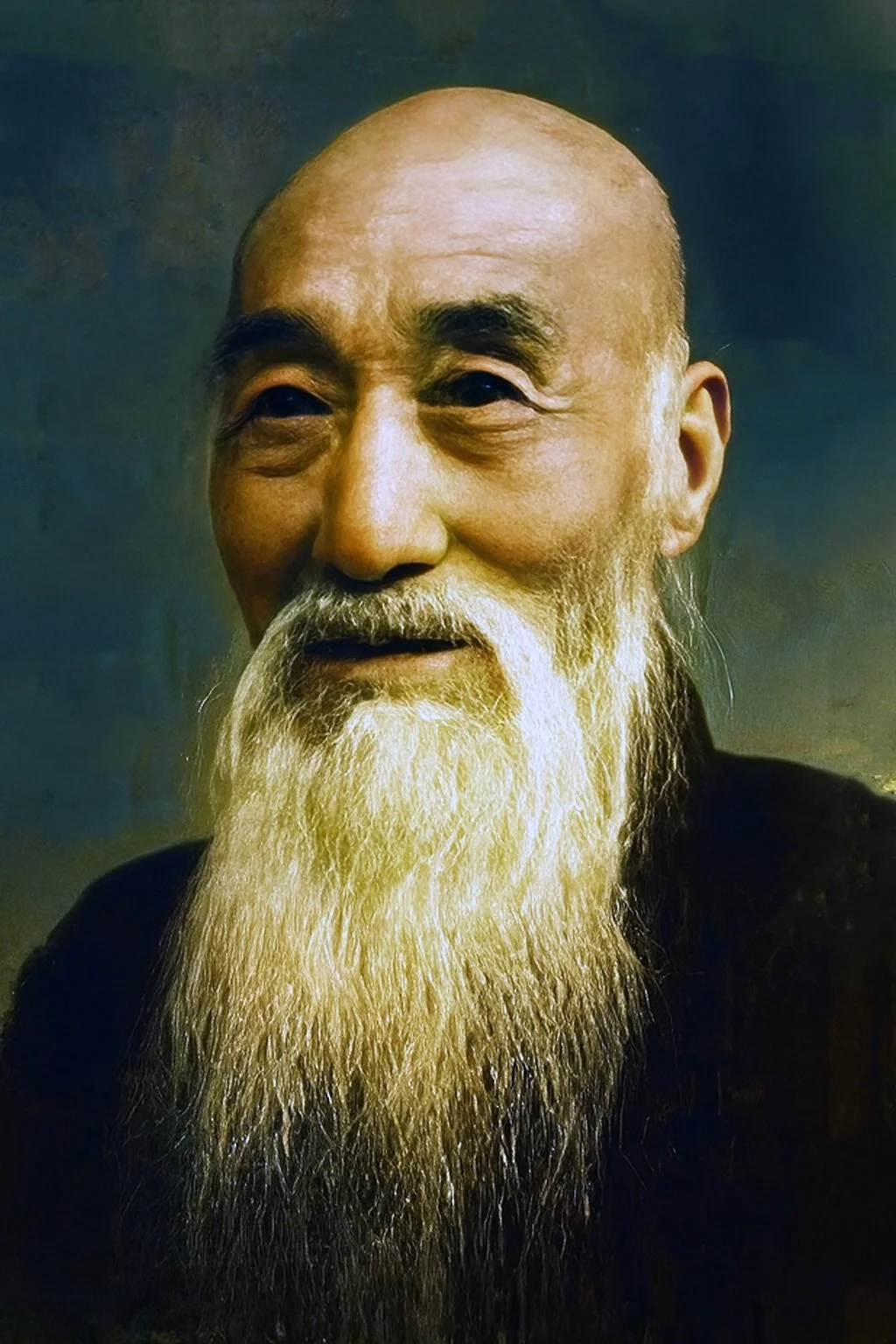
Bu Xuekuan (Born 1876 - Died 1971)
This article accompanies Episode 9 of our YouTube series “The Secrets of Xingyi Quan”, where we explore the life and influence of Bu Xuekuan and the development of Shanxi Xingyiquan in the 20th century. You can watch that episode here:
Bu Xuekuan was also the teacher of Zhang Yongyi, another important inheritor of the Shanxi Xingyi tradition, about whom we have published a separate article:
👉 Zhang Yongyi – Shanxi Xingyi
The material in this article is compiled and adapted from various Chinese-language historical and martial arts sources, including several online archives and regional chronicles.
When we talk about Shanxi Xingyi Quan, a few names always rise to the surface: Che Yizhai, the “Five Stars” of Taigu… and among the third generation, one figure quietly held the line for nearly a century , namely Bu Xuekuan (1876–1971), courtesy name Zirong.
Born in Gongjiabao Village, Qi Xian County, later settling in Taigu, Bu’s life spanned the late Qing, the Republican era, the War of Resistance, and the founding of the People’s Republic of China. Through all of that upheaval, one thing remained constant: his absolute dedication to Xingyi Quan and the martial culture of Taigu.
Early Life & Apprenticeship under Che Yizhai
Bu came from a poor farming family and only studied in a village private school for two years. Like many in that era, he first tried his hand at business by working in a brewery, then a grain shop in Taigu town, but the martial atmosphere of the Qixian County -Taigu region pulled at him.
In 1900, at age 24, he formally entered the door of Che Yizhai (also known as Che Yonghong, “Che Er”), one of Li Luoneng’s prominent disciples and a standard-bearer of Taigu Xingyi Quan.
Bu’s disciple’s etiquette was exemplary and his training relentless. He quickly became one of Che’s standout disciples and was regarded as an important inheritor of the Taigu Xingyi line.
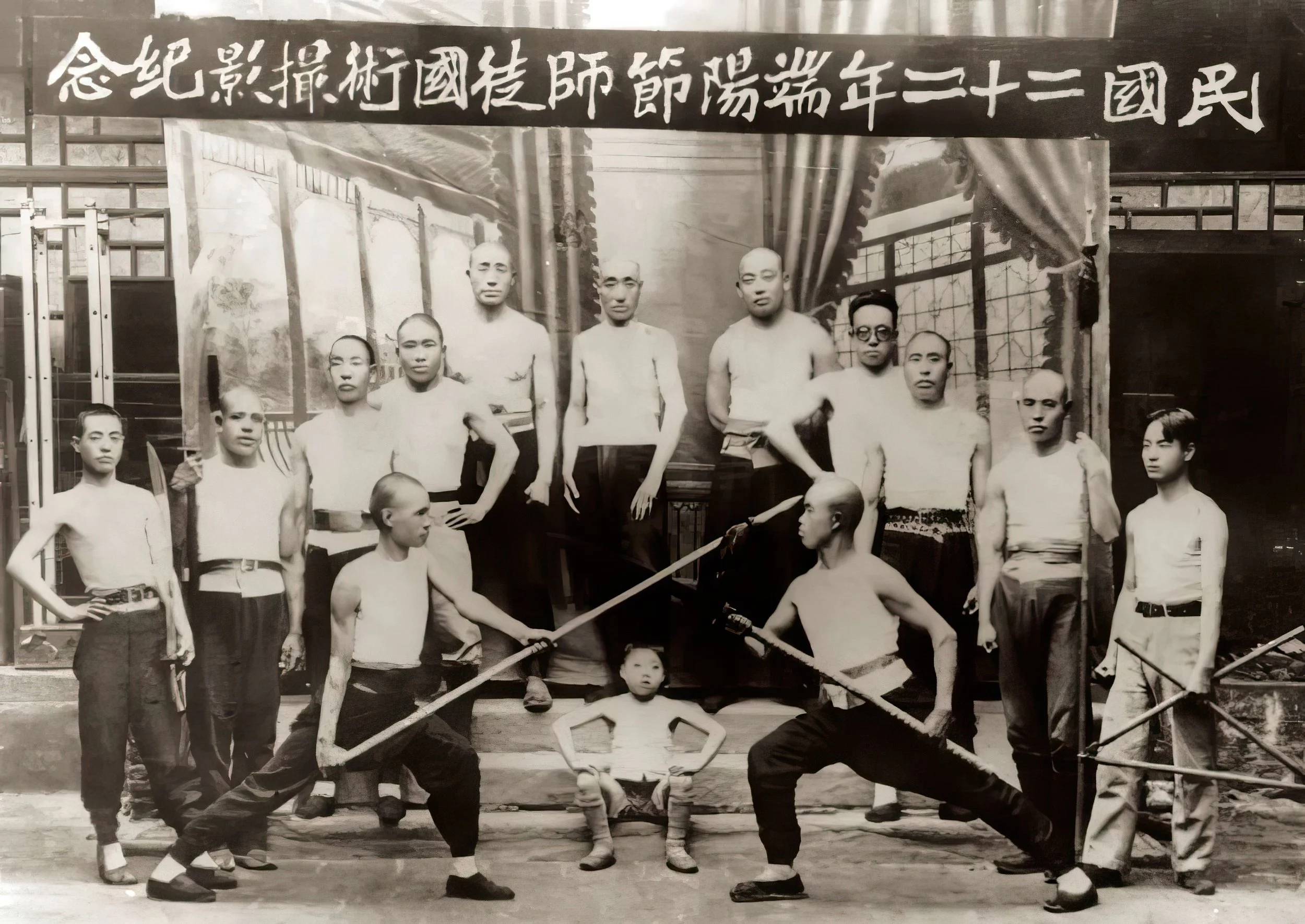
Shanxi martial artists (photo taken in 1933)
Spreading Xingyiquan: From Private Transmission to Public Education
Bu was not just a practitioner, he was also a builder of institutions.
1913 – He opened his door and began openly teaching across Taigu’s urban and rural areas.
1918 – He served as director of the Taigu County Sports Association and simultaneously taught martial arts (guoshu) at nine schools in the county, setting a precedent for martial arts in the school system.
1930 – At the invitation of Kong Xiangxi, he became the national arts instructor at Taigu Ming Xian School, where he not only taught in class, but organized martial teams and spring performances, combining broad popularization with technical refinement.
As Taigu’s martial life grew, so did the need for a dedicated institution:
1935 – Bu pushed for the creation of the Taigu County Martial Arts Institute.
The county magistrate served as director.
Bu and Song Tielin were deputy directors (later Bu became director).
Under his leadership, the Institute trained a large number of successor-level practitioners and experts, and Taigu’s reputation became firmly established.
Integrity in Turbulent Times
Bu lived through war, occupation, and massive political change, yet his reputation for uprightness and loyalty never wavered.
During the Japanese invasion, he nearly lost his life protecting the memorial stele of his teacher Che Yizhai from destruction. After 1949, as the new state began to systematize sports and physical culture, Bu was already an established elder:
He ended his formal school teaching due to age, but
Turned his own home at No. 1 Wenchangmiao Street into a training space with weapon racks, open doors, and a continuous flow of martial artists from all over.
His residence effectively became a living martial arts salon and an unofficial Taigu Xingyi headquarters.

Gathering of Xingyi practitioners in Shanxi with Guo Yunshen (seated on the right) and Che Yizhai (seated on the left) - Poster available from our store
A Lifetime of Practice: “The Same for Seventy Years”
One line sums up Bu’s training attitude:
He practiced “the same for seventy years,” never stopping regardless of the season, morning or evening, cold or heat.
Even into his nineties, he was known for:
Sharp hearing and clear eyesight
Light, vigorous steps
A body full of whole-body power, agility, and neutralization skill
He devoted particular energy in his later years to refining and innovation within the art. His contributions included:
Health-oriented practice of Xi Sui Jing (Marrow-Washing methods)
Practical fighting methods such as:
“Mandarin Duck Kicking” applications
“Lion Swallowing Hand” methods
Linked-hand (continuous partner) methods
A range of paired routines for both combat and training
These additions enriched the content of Shanxi Xingyiquan, giving later generations a fuller technical system.
Leadership, Recognition & Public Service
From the 1950s onward, Bu’s profile extended beyond the martial community into public life:
Served as chief judge, deputy chief judge, or head judge at provincial martial arts meets.
Attended multiple Shanxi Provincial Sports Conferences and advanced sports work meetings.
Major milestones included:
1952 – Elected a member of the Shanxi branch of the All-China Sports Federation.
1958 – At the first Shanxi Provincial Sports Games, he performed Xingyi Quan and Baguazhang.
1960 – Elected chairman of the Taigu County Martial Arts Association.
1963–1964 – Helped establish over 70 martial arts promotion stations across Taigu’s towns and villages, personally traveling from place to place in his late eighties, promoting martial arts for health, militia training, and cultural preservation. He also accompanied Huang Zhong, deputy director of the State Sports Commission, on an inspection of rural martial arts in Taigu.
1965 – Attended the provincial symposium on traditional routines of Xingyi, Tongbei, and Bian Gan Whipping Staff, contributing to systematizing and preserving traditional practices.
Even during the early years of the Cultural Revolution, he continued to train and teach.
When he passed away in 1971, at age 96, the Shanxi Provincial Sports Commission summed up his life in a simple but weighty appraisal:
“Bu Xuekuan was a nationally influential famous martial arts master, and played a clear role in promoting the development of Shanxi martial arts.”
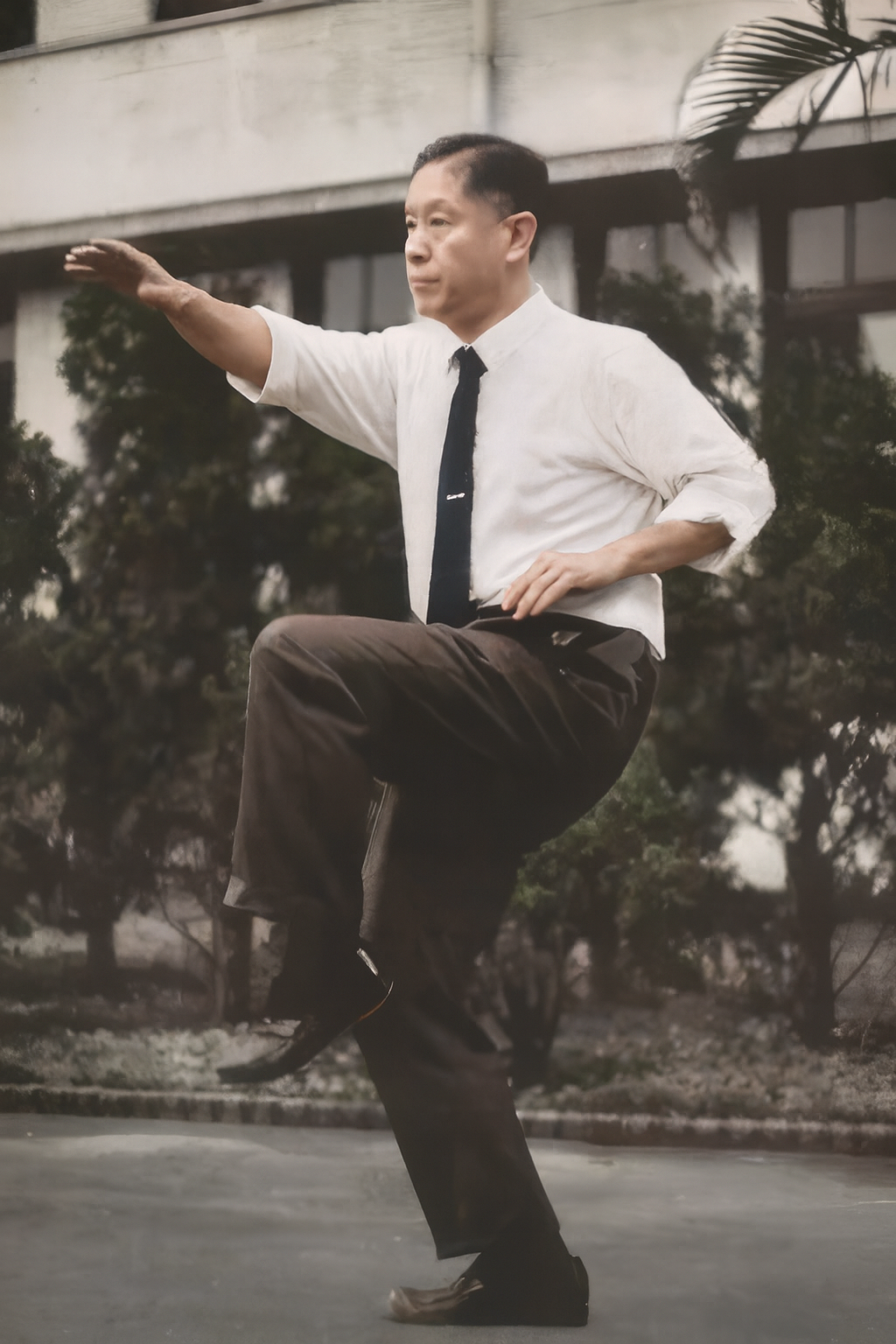
Wu Chaoxiang
Lineage, Students & Global Reach
The disciples and students taught by Bu Xuekuan took active roles in teaching, organizing, and spreading Xingyiquan. These include:
Zhang Yongyi, one of his important disciples who helped further solidify Taigu Xingyi’s reputation and was profiled in our separate blog article. W
Wu Chaoxiang, who initially moved to Taiwan and taught there and later moved to Brazil where he established a Chinese Xingyi Kung Fu school, extending Bu’s lineage and Shanxi Xingyi as a whole into South America. Interestingly, Wu was also the Xingyi Quan teacher to the great Chinese martial arts historian and educator, Stanley Henning.
In his personal life, Bu had eight children which incude his sons Binggui, Huaxuan, Bingquan and daughters Jinhua, Jinye, Jinxian, Jinxiang, Jinrui.
Following Bu Xuekuan’s Example
From a poor village boy with only two years of schooling to a nationally recognized martial arts elder, Bu Xuekuan’s life runs straight through the heart of modern Xingyi Quan’s development:
He preserved his teacher’s legacy and teachings.
He built institutions, schools, associations, county-wide training networks.
He transmitted the art through multiple generations, both in China and abroad.
He refined and expanded the technical content of Shanxi Xingyi with new methods that balanced health and combat.
And he embodied a standard of lifelong practice, integrity, and community responsibility.
In a time when martial arts are often reduced to spectacle or hobby, Bu’s story reminds us of another tradition:
A martial life where the art is not just something you do, but something you live — and something that, through that living, quietly shapes the culture and people around you.
We can all do well to follow his sterling example.
For readers interested in deeper historical context, theoretical foundations, and the classical literature that shaped masters such as Zhang Yongyi, my book “Dragon Body, Tiger Spirit – A Translation and Explanation of the Classic Texts of Xingyi Quan” offers a broader framework for interpreting these biographies and their technical significance. The book also features an extensive biographies section, covering many of the art’s prominent practitioners.
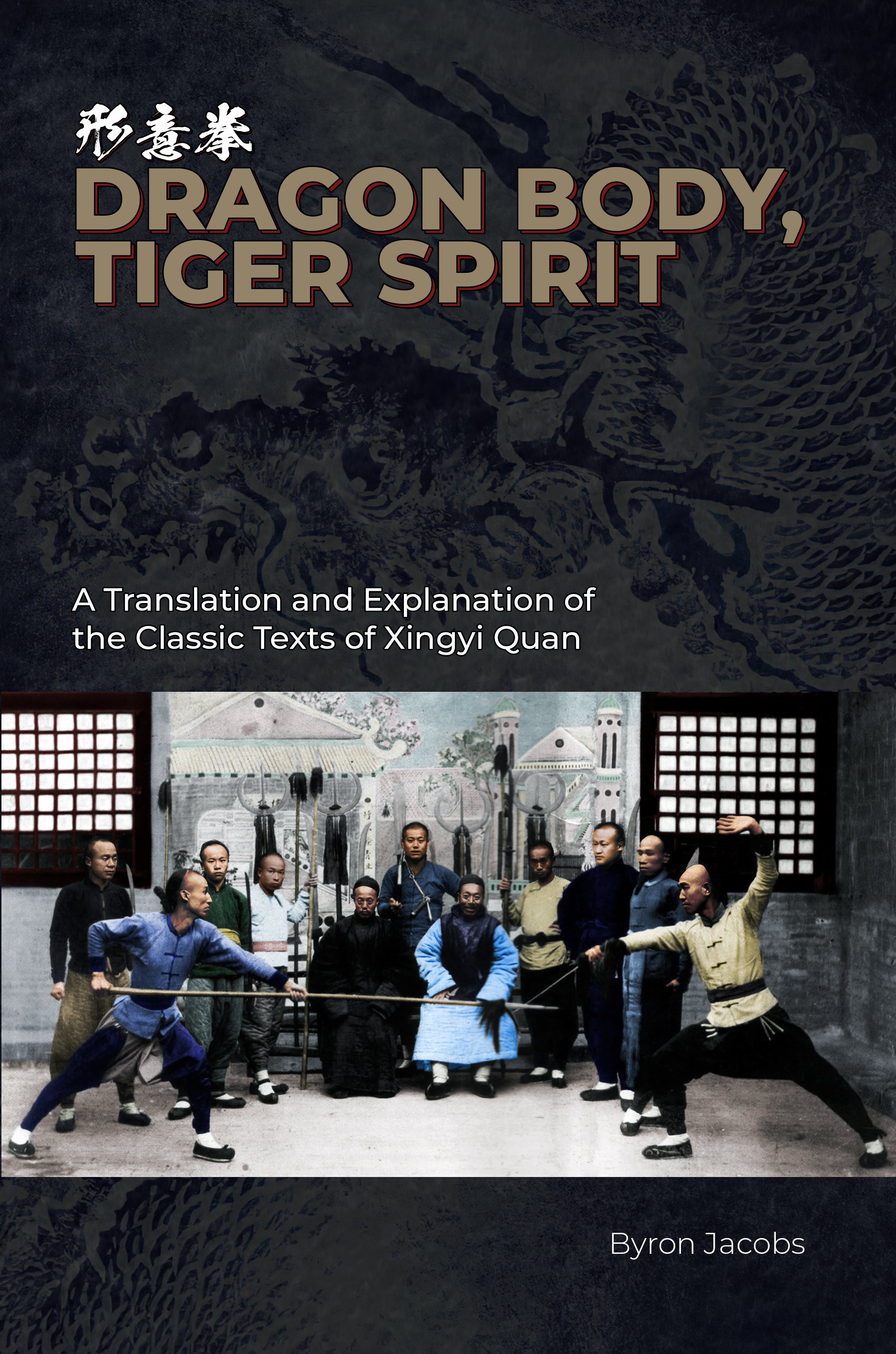
Dragon Body, Tiger Spirit encapsulates a careful presentation, translation and extensive commentary of the classical texts of Xingyi Quan. These texts aimed to document and preserve the principles and techniques at the very heart of this traditional Chinese martial art. Dragon Body, Tiger Spirit is an invaluable resource for martial arts practitioners looking to gain insight into the essence of authentic, traditional Xingyi Quan as codified and handed down from one generation to the next by previous masters of the art.
This carefully researched and written reference reflects a decade of painstaking work, backed up by decades of dedicated martial practice by the author Byron Jacobs, a disciple of Master Di Guoyong. Within the pages of this book, readers will find a wealth of practical advice, analysis, commentary, footnotes, biographies and reference material that will help orient their practice of Xingyi Quan in a manner that helps them stay true to its essence. Serious practitioners of the martial arts will find themselves gaining new insights into their practice each time they revisit this expanded analysis of the classical texts and a deeper appreciation of the historical underpinnings of the art.
Dragon Body, Tiger Spirit will remain an evergreen reference text for all Chinese martial arts enthusiasts for years to come.
NOTE:
Should your country of delivery not display at checkout, please do contact us directly to process your order.
Should you wish to use expedited delivery such as Fedex etc. please do contact us directly to process your order.
Should you want to order more than one copy of the book in a single order, contact us directly to confirm your shipping cost.