Everyday Bodies, Everyday Shuai Jiao
Xiao Li, Da Li & Lao Li (1962 Film)
The short video below features a series of scenes drawn from the 1962 film 大李小李和老李 (Dà Lǐ, Xiǎo Lǐ hé Lǎo Lǐ), a light-hearted comedy set in Shanghai during a particularly difficult and transitional moment in modern Chinese history.
Released in 1962, the film emerged at the very end of the Great Leap Forward, a period marked by widespread famine, economic dislocation, and a severe decline in the health and physical condition of the general population. By this point, the human cost of the preceding years was undeniable, and the early 1960s saw a clear shift in priorities toward recovery, stabilization, and the rebuilding of both bodies and society.
I encountered this film while conducting ongoing research for a forthcoming article and video on the great Republican-era martial artist Wang Ziping. The movie is especially noteworthy because it features Wang Ziping himself performing Taiji, making it more than a fictional portrayal of martial culture. It serves as a rare cinematic bridge between Republican-era martial traditions and early PRC visual media.
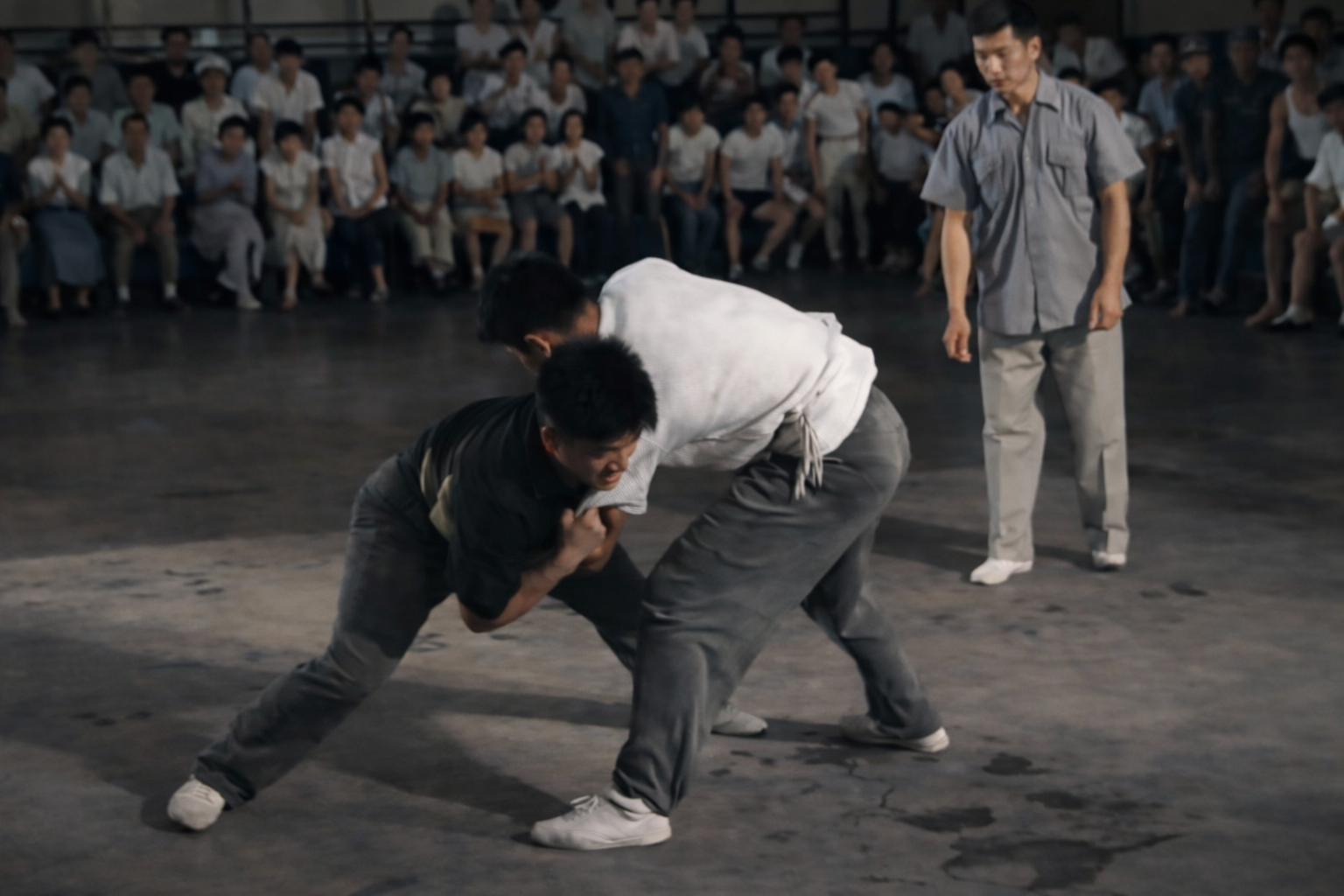
What was interesting to see was the inclusion of Shuai Jiao alongside Taiji Quan, which highlights the importance and focus on the practice during the preceding Republican era. These sequences depict ordinary working people engaging in jacket wrestling in informal, communal settings. There is no heroic framing and no attempt to elevate the practice into spectacle. Instead, the emphasis is on participation, repetition, and bodily engagement, martial practice presented as something practical, accessible, and woven into everyday life.
Viewed within the context of 1962, these scenes take on added significance. While 大李小李和老李 is clearly a comedy, its depiction of physical exercise aligns closely with broader efforts at the time to promote physical culture as a means of recovery. In the wake of famine and prolonged hardship, exercise was increasingly emphasized as a way to restore health, rebuild physical capacity, and improve the overall condition of the population.
Seen in this light, the wrestling scenes are far from incidental. They offer a small but valuable window into how traditional martial practices were repurposed in the early 1960s, grounded in utility, stripped of mystique, and mobilized in service of public health and national recovery, while still maintaining visible continuity with earlier Republican-era martial culture.
I have clipped out the scenes featuring Shuai Jiao from the film and present them below. They are shared here not as technical instruction, but as historical material.
This material also forms part of a broader research project. An in-depth video and accompanying article on Wang Ziping are currently in preparation and will explore his life and influence in greater detail, including contemporary newspaper articles from the Republican period that mention him and have not been widely circulated or discussed in the past.
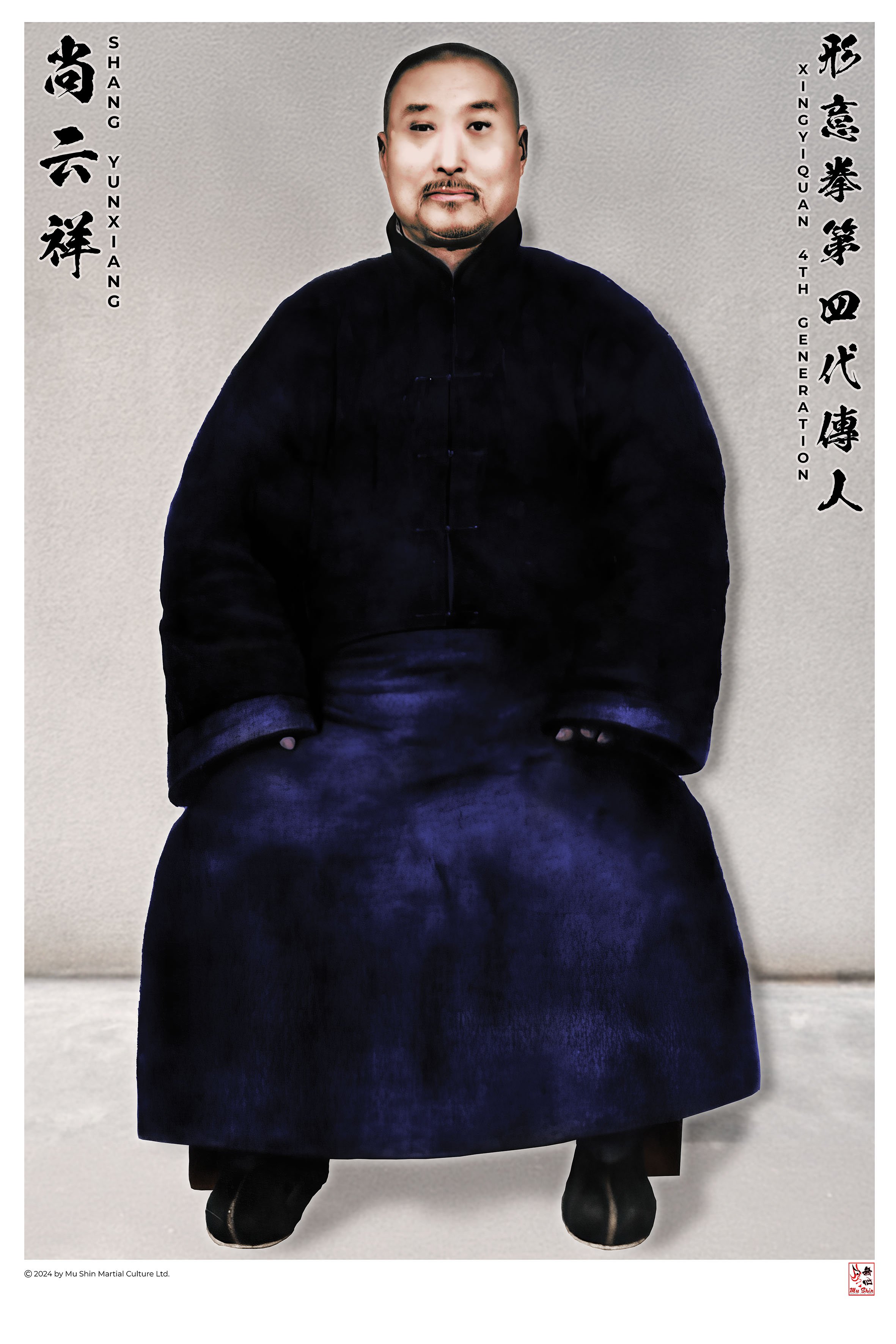
Celebrate the legacy of Shang Yunxiang, a true icon in Chinese martial arts and a revered pioneer in Beijing’s Hebei Xingyi Quan tradition. Born in Shandong in 1864, Shang was drawn to martial arts from a young age, dedicating himself to rigorous training and refining his skills with legendary masters like Li Cunyi and Guo Yunshen. Known as the “Iron-Footed Buddha” for his barefoot practice and mastery of the powerful half-step Beng Quan (Crushing Fist), Shang quickly rose to prominence. His unmatched techniques and fearless spirit helped him defeat numerous skilled opponents in challenge matches, earning him a place among China’s most respected martial artists.
He developed his own unique branch of Hebei Xíngyì Quán, which was a result of his practice and testing of the art. The vast majority of Xíngyì Quán practiced in Beijing stems from Shang Yunxiang directly. He taught numerous disciples including Jin Yunting, and Liu Huapu. He passed away in 1937.
This striking poster captures Shang’s discipline, power, and enduring influence on martial arts, commemorating his commitment to the art of Xingyi Quan and his legacy that lives on through countless students and admirers. Featuring a fully restored high quailty photo of Master Shang that has been meticulously hand colored and restored.
This poster is a high quality print for you to hang in your school or home. Display your admiration for his legacy and art proudly.
NOTE:
Should your country of delivery not display at checkout, please do contact us directly to process your order.
Should you wish to use expedited delivery such as Fedex etc. please do contact us directly to process your order.
Should you want to order more than one poster in a single order, contact us directly to confirm your shipping cost.