

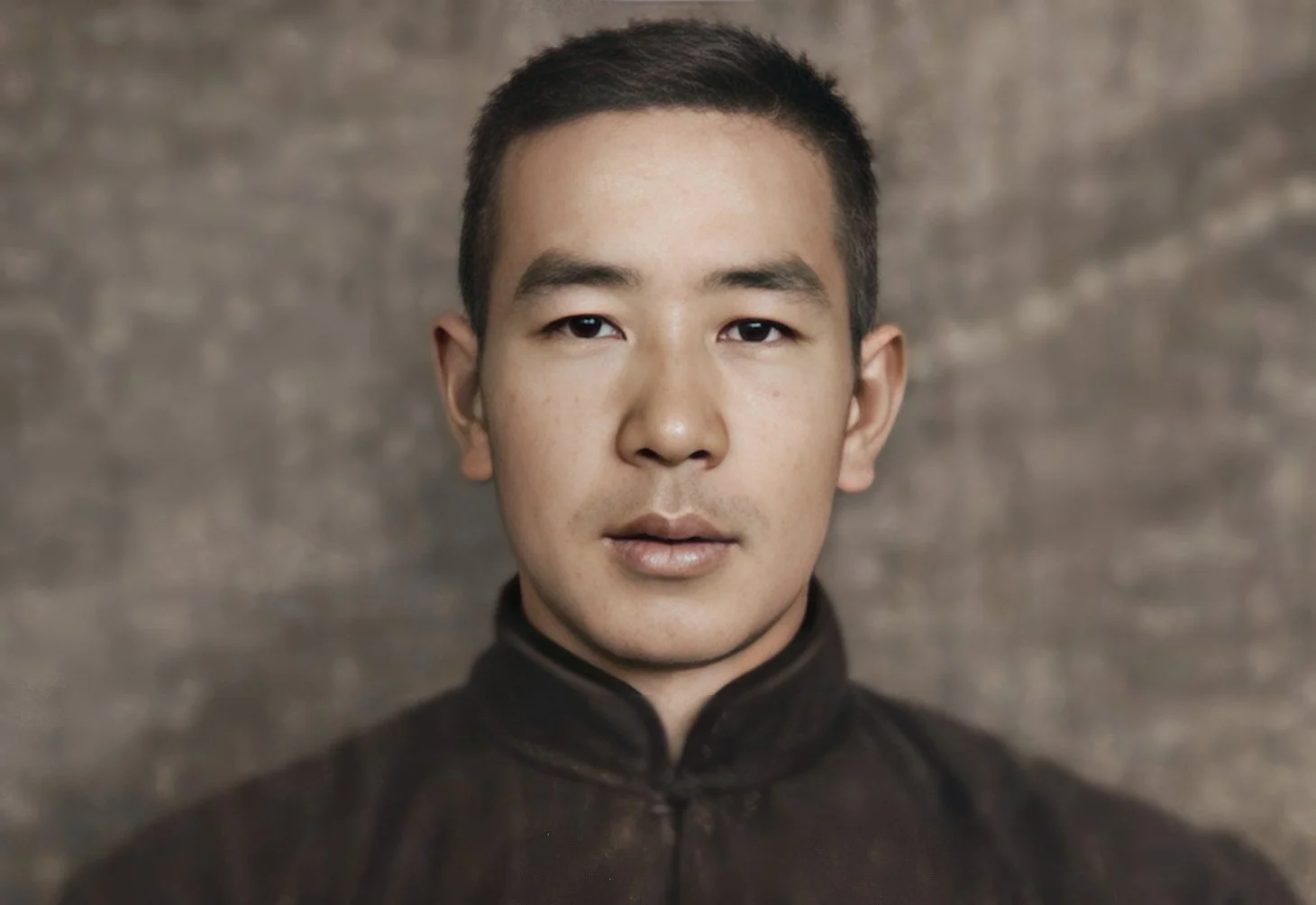
Liu Huapu / Huabu 劉華普(甫) (digital recreation)
Within my lineage of Hebei Xingyi Quan, one of the most important figures is my great-grand-teacher, Liu Huapu / Huabu 劉華普/甫.
Liu Huapu was a disciple of the renowned master Shang Yunxiang 尚雲祥, one of the most influential figures in the transmission of Xingyi Quan, especially in Beijing. Liu Huapu later taught my own teacher’s teacher, Zhao Zhong 趙忠, making him a central figure in the line of transmission through which I received the art.
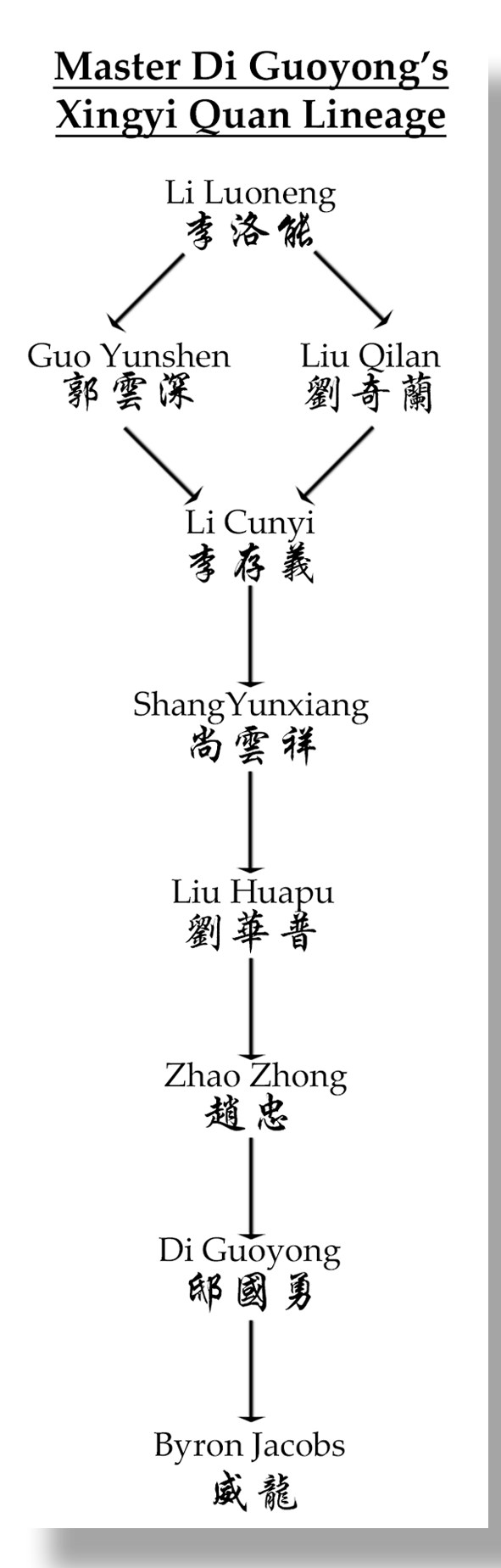
Over the years, my Shifu has told me what he knew about Liu Huapu, including stories and details that had been passed down to him from his own teacher. I also heard Liu Huapu’s name mentioned by other Xingyi practitioners in Beijing, even outside of my own lineage. This was not surprising, as he was well known within the Xingyi community, both because of his own skill and because of his connection to Shang Yunxiang.
A great deal of Hebei Xingyi Quan was disseminated in Beijing through Shang Yunxiang and his students, and Liu Huapu was a prominent figure in that process.
Recently, while having a video call with my Shifu, he mentioned that he had come across a very poor-resolution image taken from a tiny old photograph of a young Liu Huapu. It had been forwarded to him by someone in the Xingyi community. Considering the time period in which Liu Huapu lived, photography was still relatively new and expensive, and there are essentially no known clear photographs of him. For that reason, even this small, damaged image was a meaningful discovery.
My Shifu sent the image to me, and through various upscaling, restoration, and recovery programs, I tried to digitally recreate something from it. Of course, with such limited material, there is only so much that can be done. This is not a perfect restoration, but rather the best approximation we can hope for based on the material available.
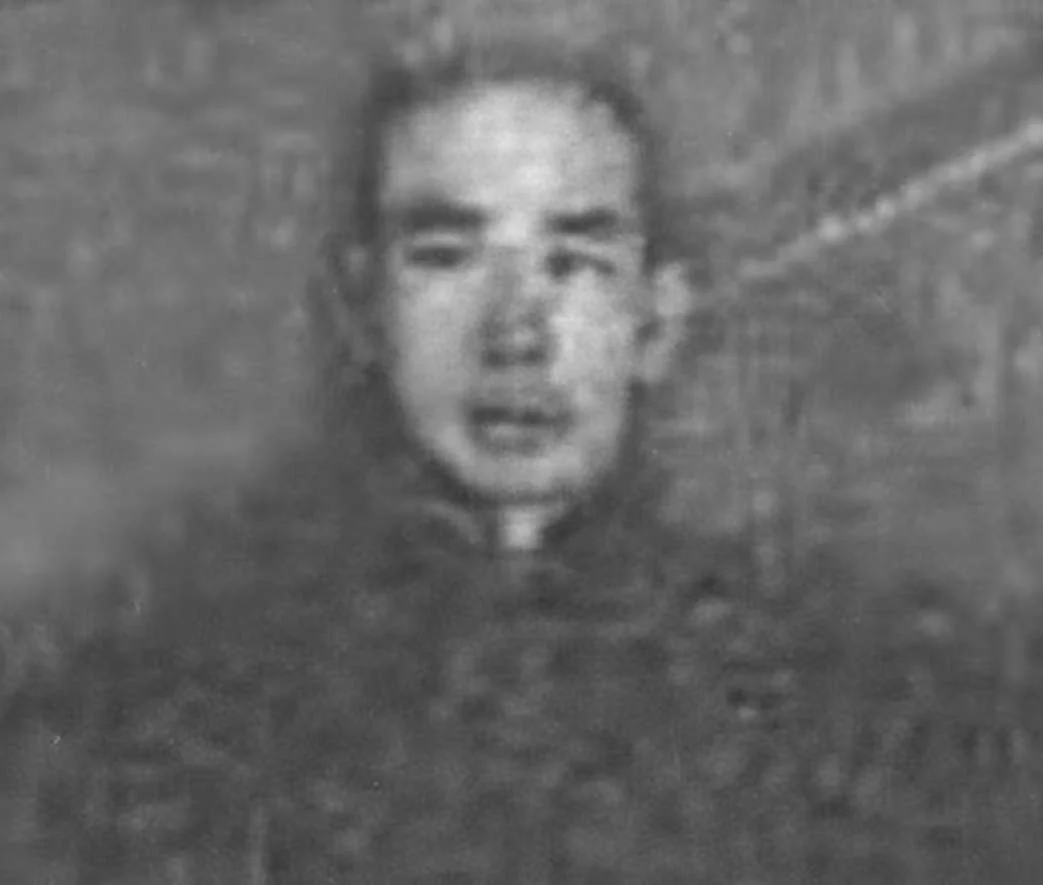
Low resolution image of Liu Huapu / Huabu
I sent the recreated image back to my teacher, and he liked it. I thought others who are interested in the history of Xingyi Quan, especially those connected to the Hebei and Shang Yunxiang lines, might also appreciate seeing it.
So here it is: a small attempt at reviving the image of a martial ancestor (shown above - first image)
In my book Dragon Body, Tiger Spirit: A Translation and Explanation of the Classic Texts of Xingyi Quan, I included an extensive biographical section on many of the key figures in the history of the art. The book not only presents the first detailed translation and explanation of the classic texts of Xingyi Quan, but also explores the lives and contributions of prominent masters who shaped the development and transmission of the system.
Here is a short excerpt from the section on Liu Huapu:
“…From accounts told by Liu Huapu’s disciple, my grand-teacher Zhao Zhong, Liu Huapu was a strict and demanding teacher. He demanded that his students work extremely hard and that they maintain all the requirements handed down to him. Zhao Zhong was required to stand in San Ti Shi for three and a half years prior to Liu Huapu teaching him anything else.
Keep in mind that Zhao Zhong was already a proficient practitioner in what was classified as Shaolin Quan when he started his training with Liu Huapu. Nonetheless, Liu Huapu still required that Zhao Zhong stand for three and a half years prior to teaching him further within the art of Xingyi Quan.
Liu Huapu’s teaching not only produced Zhao Zhong’s high level of skill in the art, but also shaped his stern mentality and strict approach to teaching his art to his disciples, including my master Di Guoyong.
Liu Huapu was well-respected in the Hebei Xingyi Quan community and was on good terms with prominent practitioners of the time, including the then head of the Si Min Wushu Society, Wu Zizhen. It was actually Wu Zizhen who asked Liu Huapu to start teaching Zhao Zhong the system in full following him standing in San Ti Shi for three and a half years. Liu Huapu might have made Zhao Zhong stand for longer if it had not been for Wu Zizhen’s request.
Liu Huapu’s disciples included Zhao Zhong, Ma Xihui, Zhang Yongtong, and Zhang Dehai.”
I will present more well researched historical info and articles regarding Shang Yunxiang and Liu Huapu/Huabu in the future.
For those interested in the history, theory, and classical writings of Xingyi Quan, Dragon Body, Tiger Spirit is available directly from:
It is also available through Amazon.

Dragon Body, Tiger Spirit is a detailed study of the classical texts of Xingyi Quan, combining careful translation with technical analysis, historical context and extensive commentary.
The classical writings preserve the principles, terminology and training methods transmitted by earlier generations of Xingyi Quan masters. In this volume, author Byron Jacobs examines these texts in relation to the practical study of the art, helping readers understand how their ideas apply to physical training rather than treating them solely as historical documents.
The book represents more than a decade of research and writing, supported by the author’s many years of martial practice and study under Master Di Guoyong. It brings together translated source material, explanatory notes, practical guidance, biographies, footnotes and reference information in one comprehensive volume.
Written for serious practitioners, teachers and researchers, the book may be studied from beginning to end or consulted repeatedly as a reference alongside regular Xingyi Quan training.
This volume includes
Translations of important classical Xingyi Quan texts
Detailed explanations of technical principles and terminology
Commentary connecting written theory with physical practice
Historical background and biographical material
Practical training guidance
Extensive footnotes and supporting references
Paperback edition
This edition contains the complete 388-page work in a lighter, flexible paperback format. Its reduced weight and compact dimensions make it convenient for regular study, travel and use alongside training.
Book details
Author: Byron Jacobs
Language: English
Paperback: 388 pages
Interior: Black and white
Dimensions: 156 × 234 × 20 mm
Weight: approximately 580 g
ISBN: 978-9925-8003-0-8
Publication date: 16 June 2023
Shipping and combined orders
If your delivery destination is not available at checkout, please contact us directly. Expedited delivery options such as FedEx may also be arranged on request.
For orders containing multiple books, contact us before purchasing so that we can confirm the most suitable combined shipping rate.