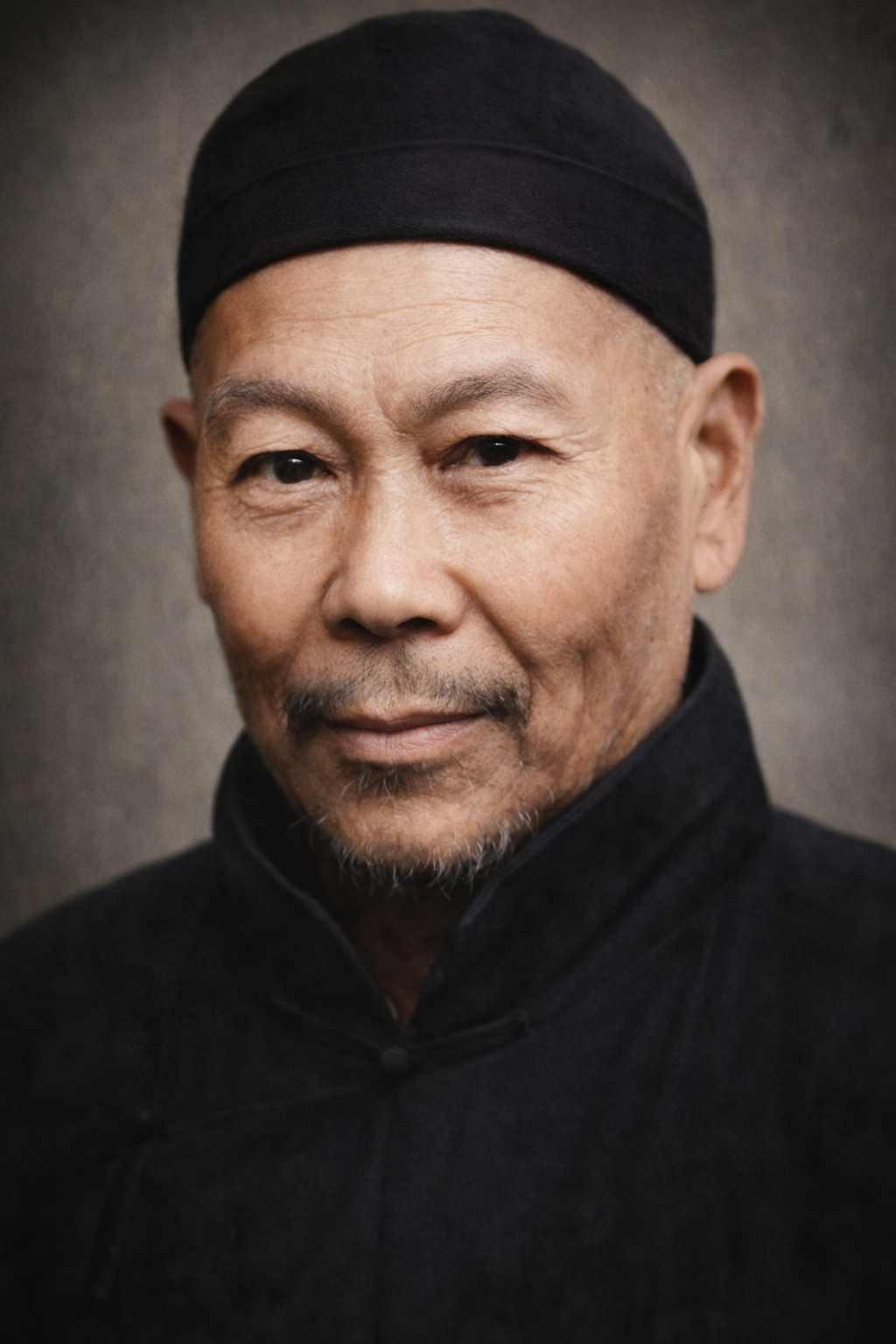
Li Fuzhen 李复祯 (digital recreation)
In Episode 11 of my Secrets of Xingyi Quan series, I briefly introduced the story of the old Shanxi Xingyi master Li Fuzhen. In that episode, reference was made to an account published in the Shanxi National Arts (Guoshu) and Physical Culture Journal, 1935, Volume 1, Issue 25, a rare period source documenting both his life and a remarkable incident involving the Boxer Rebellion (Yi He Tuan) movement.
After some effort, I was able to track down the original issue of this journal. What follows here is a complete translation of that account, presented in full.
This is a fascinating document for several reasons.
First, it gives us a glimpse into Li Fuzhen’s background and training under Che Yizhai, one of the key figures in the development of Shanxi Xingyi Quan. We see not only how Li trained, but how skill was tested, refined, and ultimately proven in a very different era, one where martial ability carried real consequence.
Second, the text touches directly on the Yi He Tuan (Boxers) and makes a point that is often glossed over or misunderstood in modern discussions, namely, that they were indeed connected to and acting with the support of the Qing government, and were actively involved in attacks against both foreign and Chinese Christians. This alone makes the account historically valuable, as it reflects how such events were understood within Chinese martial circles not long after they occurred.
But perhaps most importantly, this story reveals something deeper about the meaning of the term Shifu (師父 - Father-Teacher).
Today, especially in the West, “Shifu” is often treated as a kind of title, rank, or badge of status. In reality, it denotes a relationship, one that carries real responsibility. In this account, Li Fuzhen quite literally risks his life to save his disciple, acting without hesitation, driven not by reputation or recognition, but by a sense of duty and righteousness.
It is a powerful reminder that in traditional martial arts, words like Shifu were never meant to be symbolic or decorative, they were lived.
Below is the full translation of the article.
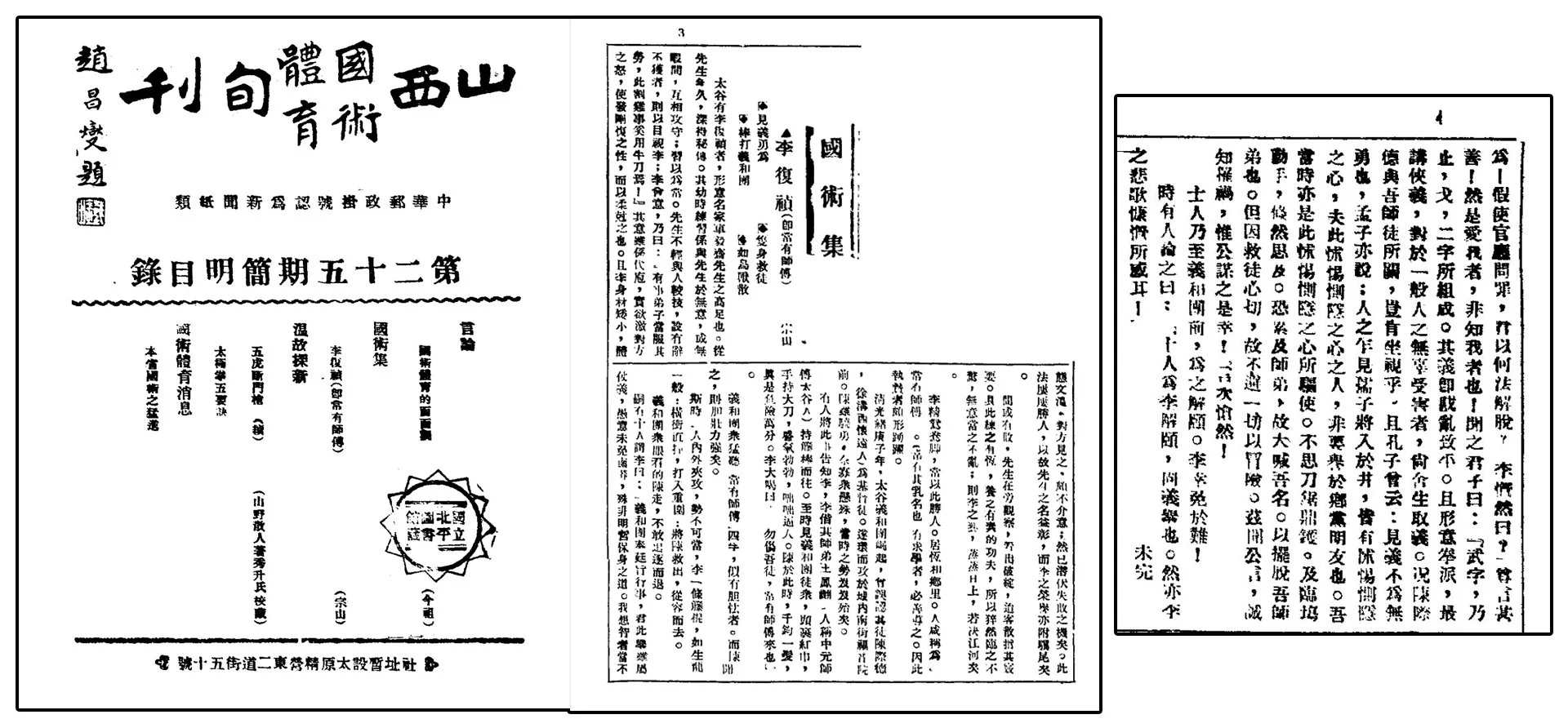
Original article from 1935
Guo Shu (Chinese Martial Arts) Anthology
▲ Li Fuzhen (Also known as Master Changyou)
◆ Acting Courageously for Righteousness
◆ Single-handedly Rescuing a Disciple
◆ Beating the Boxers with a Cudgel
◆ Scattering Like Birds and Beasts
In Taigu there was a man named Li Fuzhen, a senior disciple of the famous Xingyi master Che Yizhai. He studied with Che longer than anyone else and received his deepest teachings.
When he was young, his training with the master often took place informally. In idle moments or during breaks, teacher and student would casually engage in attack and defense drills until it became second nature. Che Yizhai did not easily test his skill against others, but if he found himself in a situation where he could not politely refuse, he would glance toward Li. Li would immediately understand and say:
“When there is work to be done, it is the disciple’s duty to take it on. This is but the business of killing a chicken , so why use an ox-cleaver?”
Though this sounded as if he were merely stepping in for his teacher, his real intention was to provoke the challenger, enraging him and making him aggressively and forcefully attack so that Li could then defeat with a calm/soft manner.
Furthermore, Li was short in stature and appeared mild mannered, with a cultured and gentle bearing. When opponents saw him, they often underestimated him. Yet through that the seeds of their defeat had already been planted. Through this method he defeated people again and again. As a result, Che Yizhai’s fame grew ever greater, and Li too shared in that reflected glory.
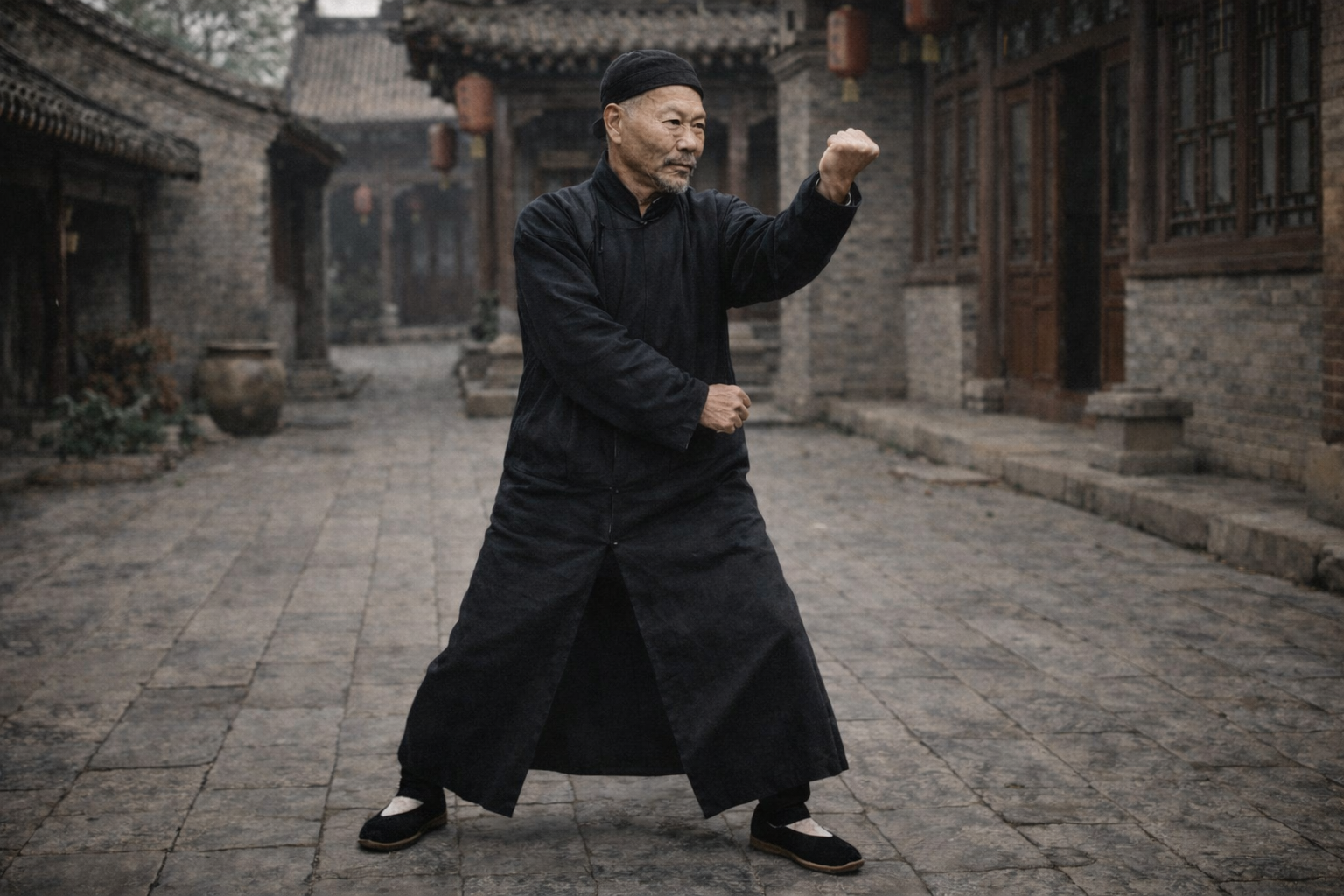
Li Fuzhen executing Zuan Quan - Drilling Fist (digital recreation)
Occasionally, if Li suffered a defeat, Che Yizhai would observe from the sidelines, spot the flaws, and wait until the challenger had left to point out his critical mistakes.
From this it can be seen that Li practiced with constancy and cultivated a skill of genuine depth. Because of this, when confronted suddenly, he did not panic; when faced with the unexpected, he did not lose his composure. Thus, Li's martial prowess improved by leaps and bounds, as unstoppable as a bursting river. Li was especially skilled in the Mandarin Duck Kick (Yuan Yang Jjiao - Chuo Jiao Methods), and often used it to defeat opponents. In everyday life he lived harmoniously with the people of his home district, and everyone called him Master Changyou.
“Changyou” was his childhood name. Whenever anyone wished to study, people were sure to recommend him. For this reason, many came to learn under him.
In the Gengzi year of the Guangxu reign (1900) of the Qing dynasty, when the Boxer’s Rebellion rose up in Taigu, they once mistakenly identified one of Li’s disciples, Chen Jide; a man from Xihuaiyuan in Xugou, as a Christian. They chased and surrounded him in front of the Fushou Courtyard on South Street within the city walls.
Although Chen was brave and capable, he was hopelessly outnumbered, and the situation had become extremely dangerous. Someone rushed to inform Li Fuzhen. Li immediately set out with his junior martial-brother Wang Fengxiang, a Taigu native known locally as Master Zhongyuan, each carrying a rattan staff.
When they arrived, they saw the Boxer mob: red cloths wrapped around their heads, large sabers in hand, brimming with ferocity and pressing forward menacingly. Chen at that moment was hanging by a thread, in truly mortal danger.
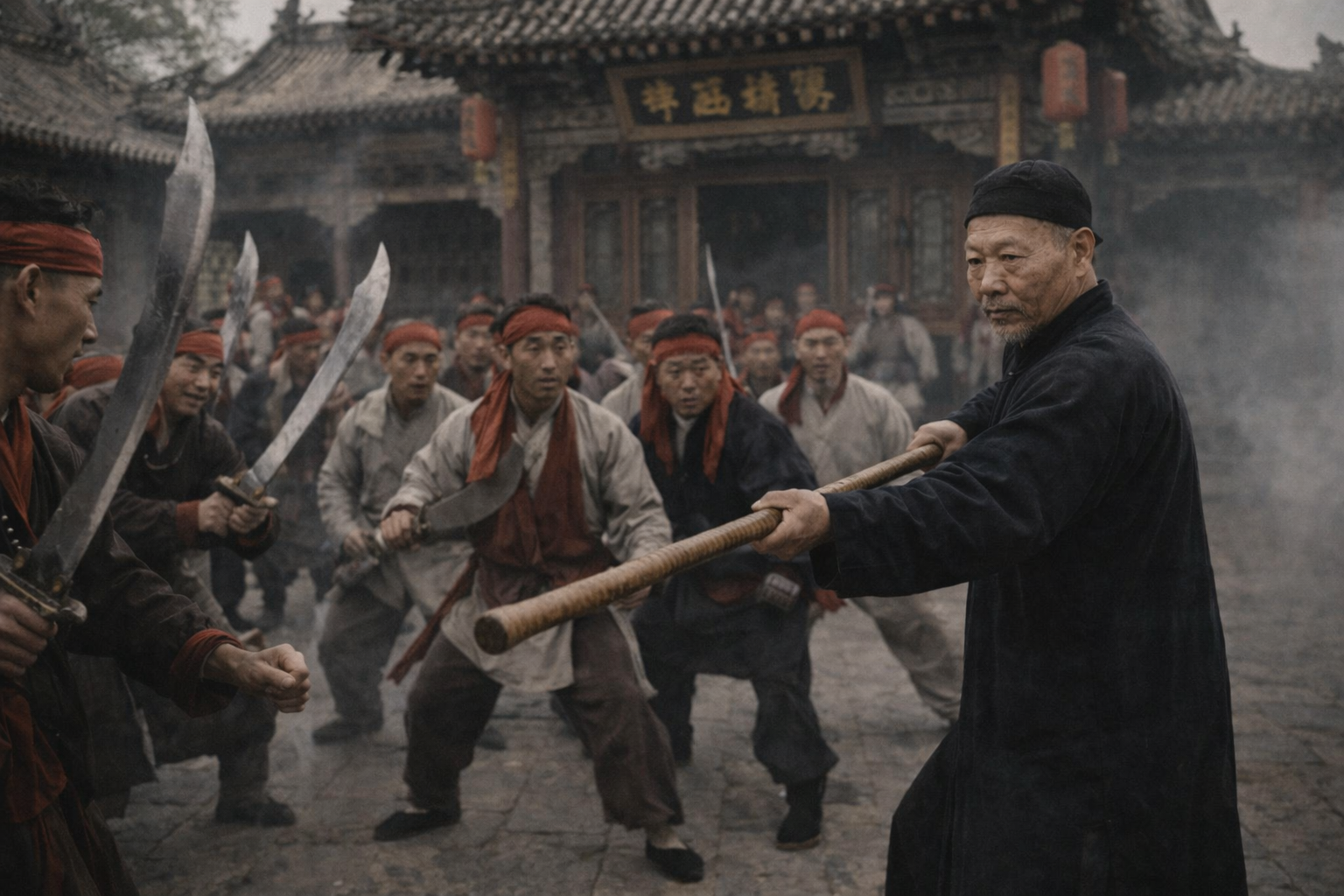
Li Fuzhen faces off against the Boxers (digital recreation)
Li shouted loudly:
“Do not harm my disciple — Master Changyou is here!”
When the Boxer crowd heard the words “Master Changyou,” some of them seemed to lose heart. And when Chen heard it, his courage and strength immediately rose.
At that moment, the Boxers attacked from the inside and outside together with unstoppable momentum. Li, wielding a single rattan cudgel like a living dragon, swept across the street, broke into the heavy encirclement, rescued Chen, and calmly walked away. The Boxers watched Chen leave, not daring to pursue, and retreated.
Afterward, a scholar came to Li and said:
“The Boxers act upon imperial decrees. Although your intervention was an act of righteousness, in my humble opinion, it was somewhat reckless, and certainly not the path of wise self-preservation. I think a wise man would not have done it. If the government officials seek to punish you, how will you exonerate yourself? ”
Li Fuzhen looked perplexed for a moment and then answered openly:
“Your words are well meant. Those who speak so care for me, but they do not truly know me. The gentleman has said that the character wu 武 (martial) is made from the two radicals, namely zhi 止 (to end/inhibit) and ge 戈 (halberd). Its meaning is to bring conflict/aggression and disorder to an end and gain peace.
Moreover, the school of Xingyi Quan places the highest importance on chivalry and righteousness. Even when ordinary innocent people suffer unjust harm, one should be willing to sacrifice one’s life for what is right. How much more so in the case of Chen Jide, who is bound to me in the relationship of teacher and disciple? How could I possibly stand by and watch?
Confucius said, ‘To see what is right and not do it is to lack courage.’ Mencius also said that when a man suddenly sees a child about to fall into a well, he cannot help but feel alarm and compassion. Such feelings do not arise because he seeks praise from his neighbors or friends. At that moment, I too was driven by exactly that same feeling of alarm and compassion.
I didn't think of the executioner's blade or boiling cauldrons. Only when I arrived at the scene and began to act did such thoughts suddenly occur to me. Fearing I might implicate my martial brother, I shouted my own name loudly to absolve him. But my heart was wholly set on saving my disciple, and so I ignored all danger and risked everything.
Now that you have spoken openly, I understand well that disaster may yet come of this. I can only hope that you will help devise some way out.”
When he had finished speaking, he sighed deeply.
The scholar then went to the Boxers and mediated on his behalf. Li Fuzhen fortunately escaped disaster!
At the time, some commented:
“The scholar mediating for Li was indeed a righteous act. However, he was ultimately moved to do so by Li's impassioned and generous spirit.”
END
For those interested in the historical figures mentioned here, I have made available on my webstore a fully restored and colorized high-quality poster of the famous Xingyi Quan gathering in Shanxi, featuring Master Guo Yunshen and Che Yizhai with their disciples. The image includes both Li Fuzhen and Wang Fengxiang, offering a rare visual connection to the individuals discussed in this account.
You can find it here: www.mushinmartialculture.com/shop
And for those who want to go beyond history and actually learn the authentic traditional art of Xingyi Quan, I teach it in depth through my Hua Jin Online Learning Program, where the material is presented systematically as it has been passed down from my Shifu, Di Guoyong, to me.
You can learn more here: www.patreon.com/mushinmartialculture

The most famous Xingyi Quan historical photo like you have never seen it before, restored and in full color. Taken when Guo Yunshen went to visit Che Yizhai and his students in Shanxi. Seated in the middle are Che Yizhai (left) and Guo Yunshen (right). The two practitioners in the front are Li Fuzhen (left) and Fan Yongqing (right). Standing in the rear row (from left to right) are San Guang Shi Fu; Guo Yushan; Wang Fengxiang; Liu Jian; Wang Zhigui; Meng Liansheng and Wu Jie.
This poster features a highly detailed restoration which was meticulously digitally colored by hand and is also the cover image for the book “Dragon Body, Tiger Spirit - A Translation and Explanation of the Classic Texts of Xingyi Quan” by Byron Jacobs.
(Image restored and colorized by Byron Jacobs)
NOTE:
Should your country of delivery not display at checkout, please do contact us directly to process your order.
Should you wish to use expedited delivery such as Fedex etc. please do contact us directly to process your order.
Should you want to order more than one poster in a single order, contact us directly to confirm your shipping cost.