Swimming Through Danger: The Tuo Shape of Xingyi Quan
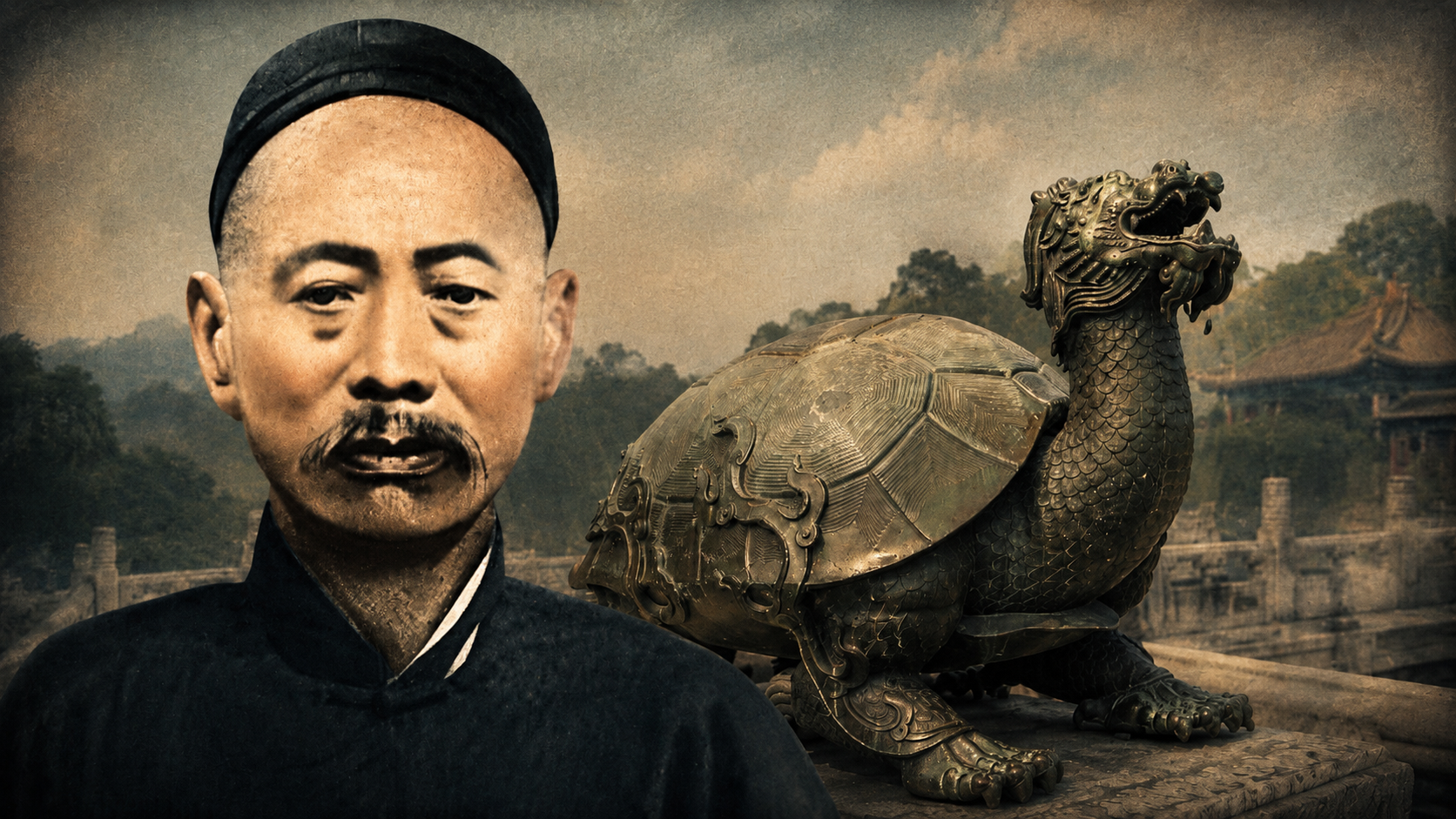
Among the Twelve Animal Shapes of Xingyi Quan, few are as difficult to define, and perhaps even more difficult to embody, as Tuo Xing, the Tuo Shape.
Depending on the lineage, the creature represented by the character 鼍 has been interpreted as an alligator, crocodile, large water lizard, water strider, tortoise-dragon which is one of the mythical sons of the dragon, which is what my lineage understands the animal to be and what Xue Dian and other classical writings described it as. These varying identifications have led to a range of English translations, each emphasizing a different aspect of the animal’s appearance or movement. Hence, I personally prefer to simply refer to it as Tuo as it is a mythical beast without an English name.
Yet the exact zoological identity of Tuo is ultimately less important than the quality it represents.
Across the various interpretations, one characteristic remains constant: Tuo is a creature at home in water. It floats, swims, turns, coils, redirects, and moves without becoming fixed against the pressure surrounding it. Within Xingyi Quan, it is this ability to move through resistance, rather than struggle directly against it, that forms the heart of the Tuo Shape.
Che Yizhai and “The Swimming Tuo Transforms Danger”
One of the best-known stories associated with the Tuo Shape concerns Che Yizhai, also known as Che Yonghong, the founder of the Che branch of Xingyi Quan, and Guo Yunshen, who became famous for his Half-Step Crushing Fist.
The version commonly repeated within lineages derived from Che Yizhai describes Guo visiting Che to compare skills. According to this account, Guo advanced relentlessly with a continuous series of Crushing Fists, driving Che backwards until he appeared to be trapped against a wall.
Rather than meeting Guo’s force with a rigid block or attempting to overpower him, Che is said to have employed the circling body method and oblique stepping of the Tuo Shape. His body turned and flowed away from the line of attack, allowing him to move around Guo and arrive behind him, where he lightly touched or patted Guo’s back.
The story came to embody the expression:
游鼍化险 — “The Swimming Tuo Transforms Danger.”
It is important, however, not to present this account as uncontested historical fact.
The story is most often encountered in Che-derived traditions. Practitioners from other branches, particularly those associated with Hebei-derived lineages, may disagree with this version of the encounter. Some reject the claim that the exchange occurred in the manner described, while others dispute the reasons Guo Yunshen would have gone to visit Che Yizhai in the first place.
Such disagreements are not unusual within the transmitted histories of Chinese martial arts.
Many famous encounters were created, recorded or elaborated upon by later generations, sometimes long after the people involved had died. In the process, oral traditions could be shaped by lineage pride, sectarian rivalry, regional identity, or the desire to elevate one teacher’s methods over those of another. Stories were frequently used to explain technical principles, establish legitimacy, or reinforce a particular branch’s understanding of its own history. As a result, the historical details of such accounts should be approached with care. We therefore need not become overly concerned with proving precisely what happened between Che Yizhai and Guo Yunshen.
Even if the encounter did not occur exactly as later generations described, or did not occur at all in that particular form, the story still contains considerable value for Xingyi Quan practitioners.
Its importance lies not merely in whether one famous master defeated or outmanoeuvred another. Its deeper value is that it expresses the essential concepts, tactics and spirit of the Tuo Shape in a clear and memorable way. The story presents a practitioner placed under intense pressure, driven towards an apparently hopeless position and deprived of the ability to continue retreating along a straight line. The solution is not to panic, brace, or meet direct force with direct force. Instead, the practitioner changes direction, redirects his incoming power, leaves the opponent’s axis of force, circles into a superior position, and transforms danger into opportunity.
Whether understood as history, oral tradition, teaching parable or a combination of all three, this is the tactical spirit of Tuo.
The Meaning of “Swimming”
My Shifu, Di Guoyong’s classical poem for the Tuo Shape begins:
“The Tuo Shape embodies the concept of swimming in water.
The two arms push water aside through the power of the waist.”
This imagery should not be understood as decorative imitation. The practitioner is not simply pretending to be an animal swimming. The image communicates a very specific method of whole-body movement. The arms circle and push alternately to the left and right, as though moving water aside. However, this action does not originate from isolated arm strength. The waist turns, the spine coils, the shoulders and hips coordinate, and the limbs express the force generated by the entire body. The arms are therefore not the engine of the movement. They are the outer expression of a deeper rotational action.
When practiced correctly, the body does not appear to execute a series of disconnected techniques. It moves continuously, with each contraction containing the beginning of expansion and each turn preparing the next change of direction. This is why the image of swimming is so useful. A swimmer cannot remain stiff and still move efficiently through water. Every action must connect to the next. The body must work as an integrated unit, adapting constantly to the surrounding pressure. The Tuo Shape cultivates precisely this quality.
Wrapping, Leading, Drilling and Overturning
The next line of Di Guoyong’s poem states:
“Wrapping and leading, drilling and overturning, adding an elbow strike.”
This line reveals that the Tuo Shape is not merely an evasive exercise. It contains numerous offensive and defensive possibilities concealed within one continuous movement. The circling arms may wrap around an opponent’s limbs, lead an incoming attack away from its intended target, or redirect force across the practitioner’s body. As the forearms twist, they contain drilling and overturning actions that may be used to enter, deflect, control or strike.
The elbows remain close enough to the body that elbow strikes can emerge naturally from the rotation. The shoulders may barge or collide, while the turning of the waist allows the practitioner to issue force sideways rather than only along a direct forward line. The distinction between defence and attack becomes increasingly blurred. A wrapping action may be a deflection, but it may also control the opponent’s arm. A turn of the waist may evade a strike, but it may simultaneously position the shoulder for a collision. A retreating step may appear defensive, but it may draw the opponent forward into emptiness and create an opening for a counterattack.
The Tuo Shape therefore teaches that neutralization should never become passive. Its defensive quality is active, positional and potentially destructive.
The Unique Footwork of Tuo
Xue Dian emphasized that the stepping of the Tuo Shape differs from that of the other Xingyi animals.
The practitioner travels along an oblique or zigzagging pathway. As one foot steps diagonally, the rear foot follows closely inward, passing near the shin before stepping out along the next angle. This stepping method allows the body to move forward, backward or sideways without becoming fixed upon a single line.
Many Xingyi methods emphasize decisive forward entry. The Tuo Shape retains Xingyi’s directness and whole-body power, but teaches the practitioner how to alter the angle of engagement when a straight path is obstructed or dangerous. A method of applied flanking. Its footwork is particularly suited to situations in which the opponent has gained momentum or is pressing aggressively forward. Rather than continuing to yield along the same line until no space remains, the practitioner changes direction.
This is why the Che Yizhai story, regardless of its precise historical accuracy, remains such an effective illustration of the method. Once the practitioner has been driven towards a wall, continuing to retreat in the same direction can no longer solve the problem. The answer is not to retreat farther, but to step obliquely, turn, and alter the entire spatial relationship.
Opposite Stepping and Coiled Power
The ancient instructions quoted by Xue Dian state that the essence of the Tuo Shape is hidden within its opposite stepping.
Opposite stepping generally refers to the relationship in which the forward hand and forward foot are on opposite sides. Within the Tuo Shape, this creates a pronounced twisting connection through the torso. As one leg steps, the opposite side of the body becomes involved in the wrapping and leading action. The waist coils between the upper and lower body, storing and releasing rotational force. This crossed-body connection is one reason the Tuo Shape feels different from more straightforward Xingyi movements.
Its power is not produced by swinging the arms horizontally. It emerges from a connected spiral running through the legs, hips, waist, spine, shoulders and arms. This is the essence of “Heng” or crossing, which is one of the core elements. The lower hand also contains important hidden functions. It may guard the body, control an opponent’s arm, strike low, support a throwing action, or prepare the next phase of the movement.
The Spirit of Tuo
Every animal within Xingyi Quan contains more than a collection of techniques. Each presents a particular spirit and quality of mind and body.
The spirit of Tuo is not timidity. It is composed adaptability under pressure. And while it “transforms and melts” incoming force, it is not a small creature, it is a large Dragon-Turtle. It has the power to “overturn rivers and seas”. The spirit of the motion should feature this key intent.
To practice the Tuo Shape is therefore to cultivate the ability to remain structurally unified while circumstances change around you. It teaches the practitioner to neither collapse before force nor become stubbornly opposed to it. One moves with the pressure just long enough to escape its control, then changes direction and takes command of the situation. This is the deeper meaning of “The Swimming Tuo Transforms Danger.”
The poems and commentaries surrounding the Tuo Shape reveal how much can be hidden within a seemingly short animal exercise. Its movements carry ideas of whole-body power, rotational force, oblique stepping, tactical evasion, force neutralization, entering, striking, health cultivation and personal transformation. These layers are easily lost when the shape is approached merely as a sequence to be copied.
The classical writings encourage us to look beyond the outer movement and ask what the movement is intended to accomplish, what quality it is designed to cultivate, and what type of mind it demands from the practitioner.
The translations and commentary presented in Dragon Body, Tiger Spirit: A Translation and Explanation of the Classic Texts of Xingyi Quan were prepared with this goal in mind: to make the original poems and discourses available while exploring how their language relates to the physical and tactical practice of Xingyi Quan. The Tuo Shape is one of the clearest examples of why these texts remain valuable.
It is not simply the imitation of an unusual animal. Like a great creature moving through water, the practitioner does not fight every current.
They learn how to pass through it.
If you are interested in learning Tuo Shape as well as the full Classical Hebei Xingyi Quan system, join the Hua Jin Online Learning Program today. For more info click here.
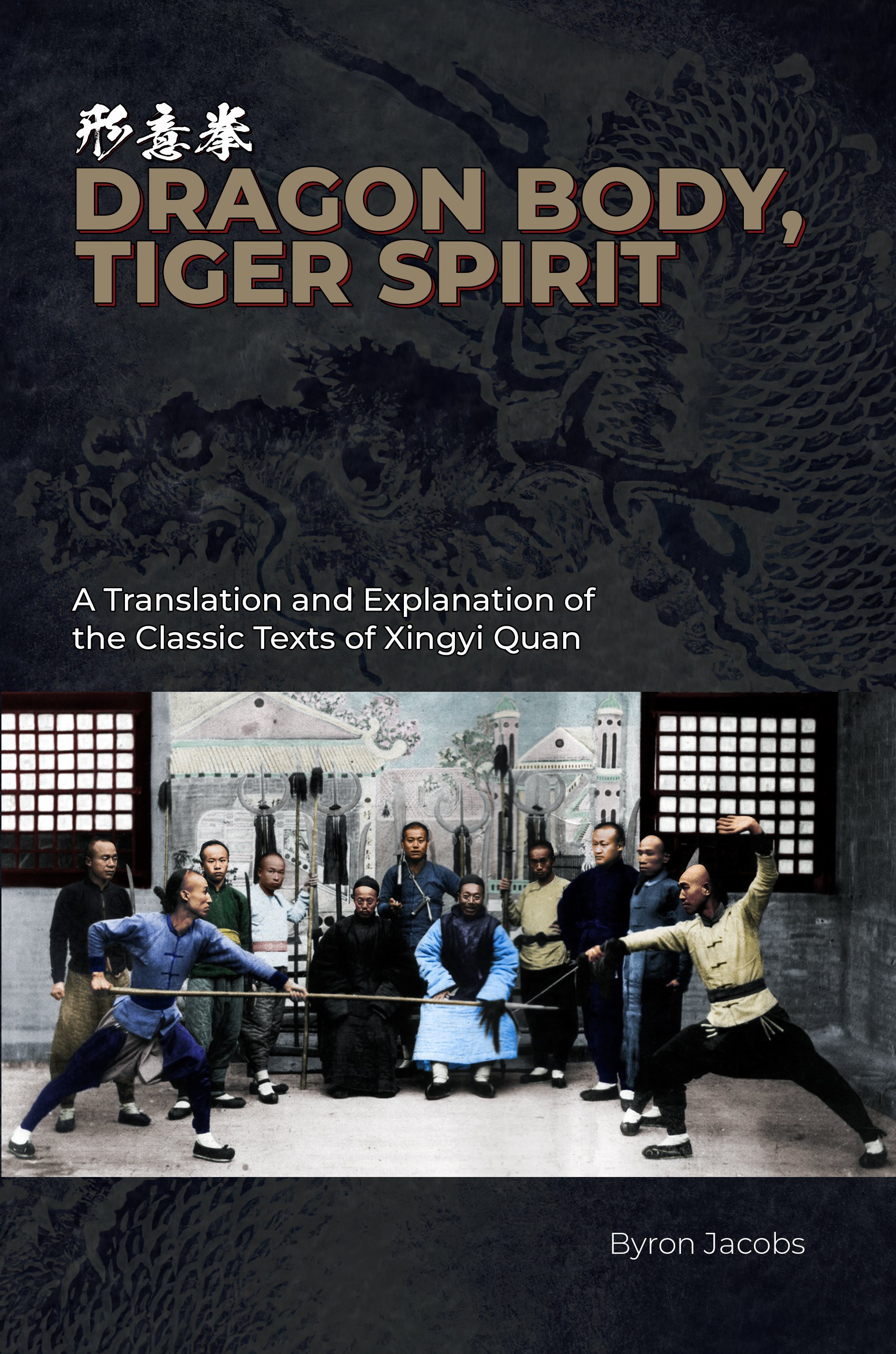
Dragon Body, Tiger Spirit presents translations, analysis and extensive commentary on the classical texts of Xingyi Quan. These writings preserve the principles, training methods and technical understanding transmitted by earlier generations of the art.
Rather than treating the classics as abstract historical documents, author Byron Jacobs examines their relationship to the practical study of Xingyi Quan. Detailed commentary, explanatory notes and historical context help readers understand the terminology, concepts and methods contained within the original texts.
The book represents more than a decade of research and writing, supported by the author’s many years of martial practice and study under Master Di Guoyong. It brings together translated source material, technical analysis, practical guidance, biographies, footnotes and reference information in a single substantial volume.
This work is intended for serious practitioners, teachers and researchers seeking a deeper understanding of traditional Xingyi Quan. It can be read as a structured study of the classical literature or consulted repeatedly as a reference alongside regular training.
This volume includes
Translations of important classical Xingyi Quan texts
Detailed commentary and explanation of key principles
Practical guidance connecting written theory with physical training
Historical background and biographical material
Extensive footnotes and supporting references
Chinese martial arts terminology presented within its proper context
Hardcover edition
This premium edition features a gold-embossed, linen-wrapped hard cover, thread-sewn binding and a protective dust jacket. Its durable construction is designed for long-term use as a reference volume.
Book details
Author: Byron Jacobs
Language: English
Hardcover: 388 pages
Interior: Black and white
Dimensions: 166 × 243 × 33 mm
Weight: approximately 950 g
ISBN: 978-9925-8003-1-5
Publication date: 16 June 2023
Shipping and combined orders
If your delivery destination is not available at checkout, please contact us directly. Expedited delivery options such as FedEx may also be arranged on request.
For orders containing multiple books, contact us before purchasing so that we can confirm the most suitable combined shipping rate.