Chinese Girl Athletes: A 1920 Western Glimpse of Kung Fu Women of the Chin Woo Athletic Association - The North China Herald (5)
Introduction
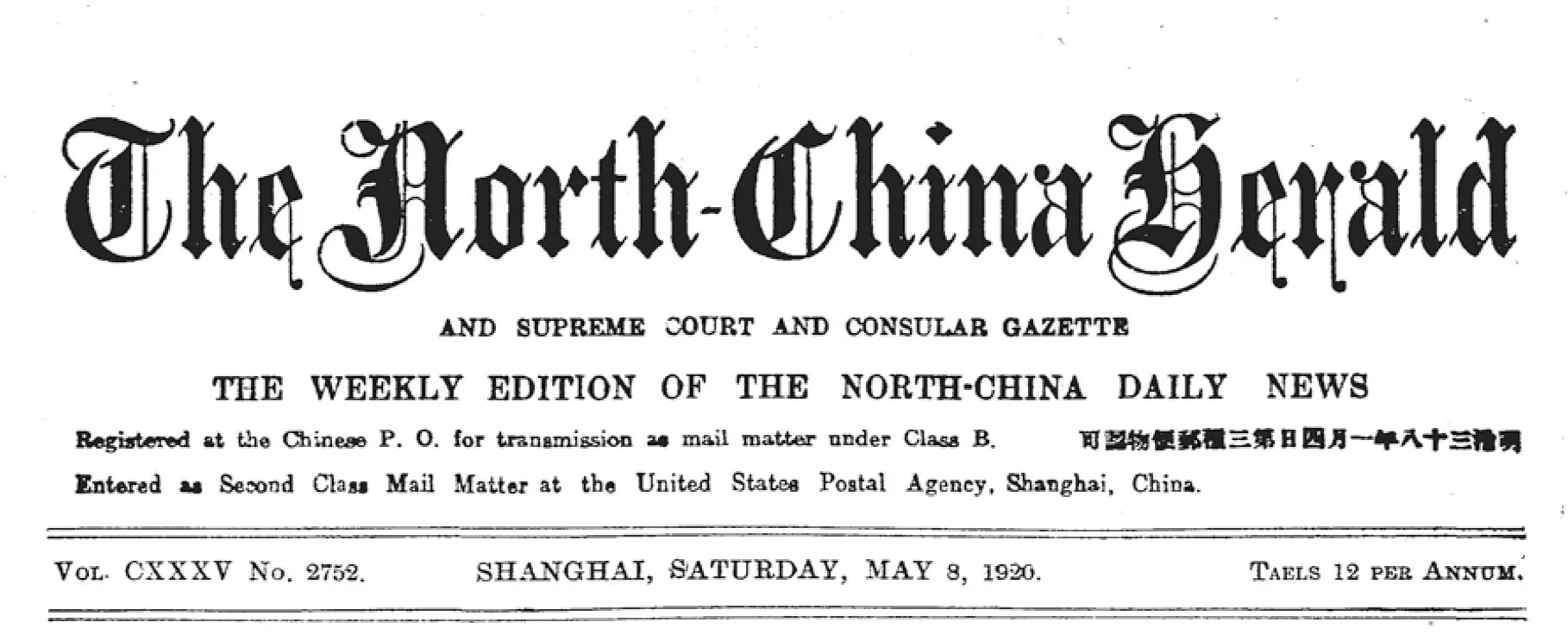
In this continuing series looking at old Western newspaper reports on Chinese martial arts during the Republican era, we have another interesting article from The North China Herald, published on May 8, 1920.
During the early twentieth century, the Chin Woo Athletic Association (Jingwu) became one of the most influential institutions in the modern transformation of Chinese martial arts. It moved martial practice away from private courtyards, family lineages and closed teacher-disciple circles and placed it within a modern system of public instruction, physical education and national strengthening.
Among its most progressive achievements was the establishment of an official women’s programme.
On May 8, 1920 an English-language article published in the North-China Herald, titled “Chinese Girl Athletes” reported on the formal inauguration of the Ladies’ Department of the Chin Woo Athletic Association. The event was held at the Young Men’s Christian Association before an audience of more than eight hundred spectators. Approximately eighty girls participated in a programme that included speeches, group drills, gymnastics, Western sports and, most importantly, Chinese martial arts. To a modern reader, an organised martial arts demonstration by women may not appear especially unusual. Within the social environment of early Republican China, however, it represented a significant break with convention and tradition
In everyday society, martial arts training was overwhelmingly regarded as a masculine activity. It was associated with soldiers, guards, armed escorts, village militias etc. While individual women undoubtedly practised martial arts, particularly within martial families or theatrical communities, formal and publicly promoted instruction for women remained soemwhat rare. There were also broader restrictions governing women’s physical behaviour and their participation in public life. The newspaper report itself directly contrasted the young women of Chin Woo with those of an earlier generation.
The most significant feature of the Chin Woo women’s programme was that it was not conceived as a simplified, decorative or less demanding version of the men’s curriculum. The women demonstrated boxing, kicking, acrobatics, wrestling and weapons work. They did not restrict themselves to solo forms or general calisthenics. Their training also included agonistic practice in which participants worked against active and resisting partners.
They boxed, wrestled, handled weapons and performed partnered martial techniques. In other words, they were introduced to the same essential dimensions of martial practice as the men: physical preparation, technical development, controlled opposition and the practical application of skill.
The article is also noteworthy for its English descriptions of two recognisable Chinese jumping-kick techniques.
The reporter wrote:
“‘Turning the wind’ jump and the ‘double kick’ were exhibited with much grace and neatness.”
The first almost certainly refers to the Xuanfeng Jiao 旋風腳, today commonly translated as the Whirlwind Kick or Tornado Kick. It is a jumping and turning technique in which the practitioner rotates through the air before delivering a kick.
The second appears to refer to the Erqi Jiao 二起腳, a traditional jumping front kick. In this technique, the practitioner springs upward, usually lifting one leg before striking with the other. It is often practised with a slap of the hand against the kicking foot and remains common in many systems of northern Chinese martial arts. This may represent one of the earliest English-language newspaper references to specific named Chinese martial arts techniques.
During the final years of the Qing dynasty and the opening decades of the Republic, reformers increasingly argued that China’s future depended upon the health and education of its entire population. National strength could not be created solely through political reform, military technology or industrial development. It required physically capable citizens, and this citizenry included women.
A society that neglected the physical development of half its population could not become strong. Physical education was consequently linked to women’s emancipation, social reform and the creation of a modern citizenry. Chin Woo embodied this idea in a particularly direct way. Its female members were not told that weakness was a natural or desirable feminine quality. They were encouraged to become strong, active, disciplined and capable.
The article is especially valuable because it records the women’s own comments about what training had done for them and the benefits extended far beyond fighting ability. The physical training had improved their life and health across the board, which is and always will be a great benefit to martial arts practice.
Although Chinese boxing was given pride of place, Chin Woo was not hostile towards foreign sports or methods of exercise.
The women played football, tennis, volleyball and basketball. They also practised gymnastics, group drills and other forms of Western physical culture. This openness was central to the Jingwu approach. The purpose of training was the general improvement of health, physical ability, discipline and national strength. Chinese martial arts were emphasised most strongly, but they did not have to exist in isolation from other useful forms of exercise.
This is an aspect of early Jingwu culture that is sometimes overlooked. The association was deeply committed to Chinese martial traditions, yet it did not define that commitment through rejection of everything foreign. It was willing to adopt football, athletics, gymnastics and modern training methods whenever they contributed to the physical development of its members. The goal was not to preserve martial arts inside a sealed cultural container. It was to strengthen the Chinese people. In this respect, early Jingwu was often more open-minded than some martial artists today, who may treat supplementary conditioning, cross-training or participation in other sports as a betrayal of tradition. Jingwu’s founders did not see a contradiction. Chinese martial arts remained the heart of the programme, but the heart belonged to a larger and healthier body.
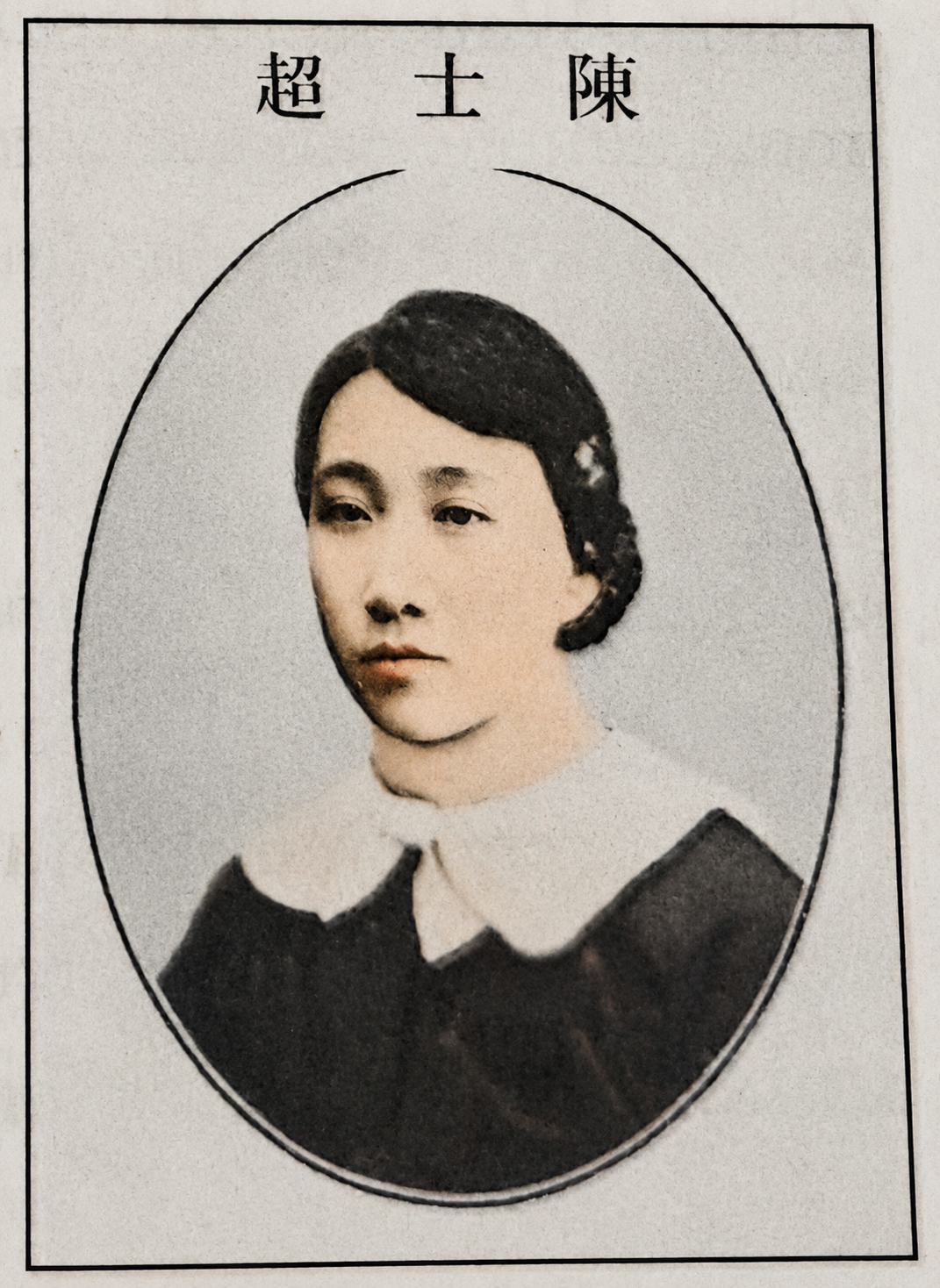
Portrait of Chen Shichao 陳士超 (colorized)
Chen Shichao and the Women’s Programme
The leading figure behind the women’s programme was Chen Shichao 陳士超.
Chen helped organise martial arts and physical education for female students, established a women’s team and became the director of the Jingwu Women’s Sports Association. Her own writings, published in 精武本紀 Jingwu Commemorative Works in 1919, allow us to hear her ideas directly.
Chen expressed her views on women’s physical education even more directly in “A Brief Account of the Jingwu Women’s Model Group”—Jingwu Nüzi Mofan Tuan Jilüe 精武女子模範團紀略:
“The Jingwu Women’s Model Group was established in order to promote physical education among women. When Heaven gives birth to human beings, their heads are equally round and their feet equally square; there is not the slightest distinction between them. Yet whenever tasks are undertaken, women invariably yield to men. This is because women themselves willingly accept that their constitutions are weak, and because they have not pursued physical education.
In the sixth year of the Republic [1917], I, Shichao, together with the ladies Zhang Xiangwen, Huang Wanxiang, Zhou Sujun, Zhang Xiangsu, Chen-Lu Xueying, and others, jointly founded this group. We also pressed my sixth elder brother, Gongzhe, to serve as instructor. In less than half a year, the students’ physical strength improved extraordinarily. Thereafter, those joining the group came one after another without interruption.
Accordingly, in June of the seventh year [1918], the entire membership held a general meeting, established regulations, elected officers, and strictly fixed rewards and punishments. The members trained enthusiastically, without interruption through wind or rain, and the improvement in their physical strength certainly did not yield to those imposing seven-foot men who boast of themselves as manly heroes. Who can say that we women are born with weak constitutions?
I have some slight familiarity with medicine. For the previous four years, I had often suffered from heart palpitations. The medicines I administered to myself produced not the slightest effect. I then sought out distinguished Western physicians everywhere, but this too was entirely in vain. After my sixth elder brother began teaching me martial arts, six months passed and the chronic illness seemed to disappear.
Miss Huang Wanxiang had exhausted herself through study and possessed the weakest constitution. She did not dare expose herself to the wind. Now, even in severe cold, she can withstand it wearing only a lined garment. Before and after, she appears like two different people.
Such are the great effects and extraordinary results. Those who are unwilling to accept that they were born physically weak, why not rise and join us?”
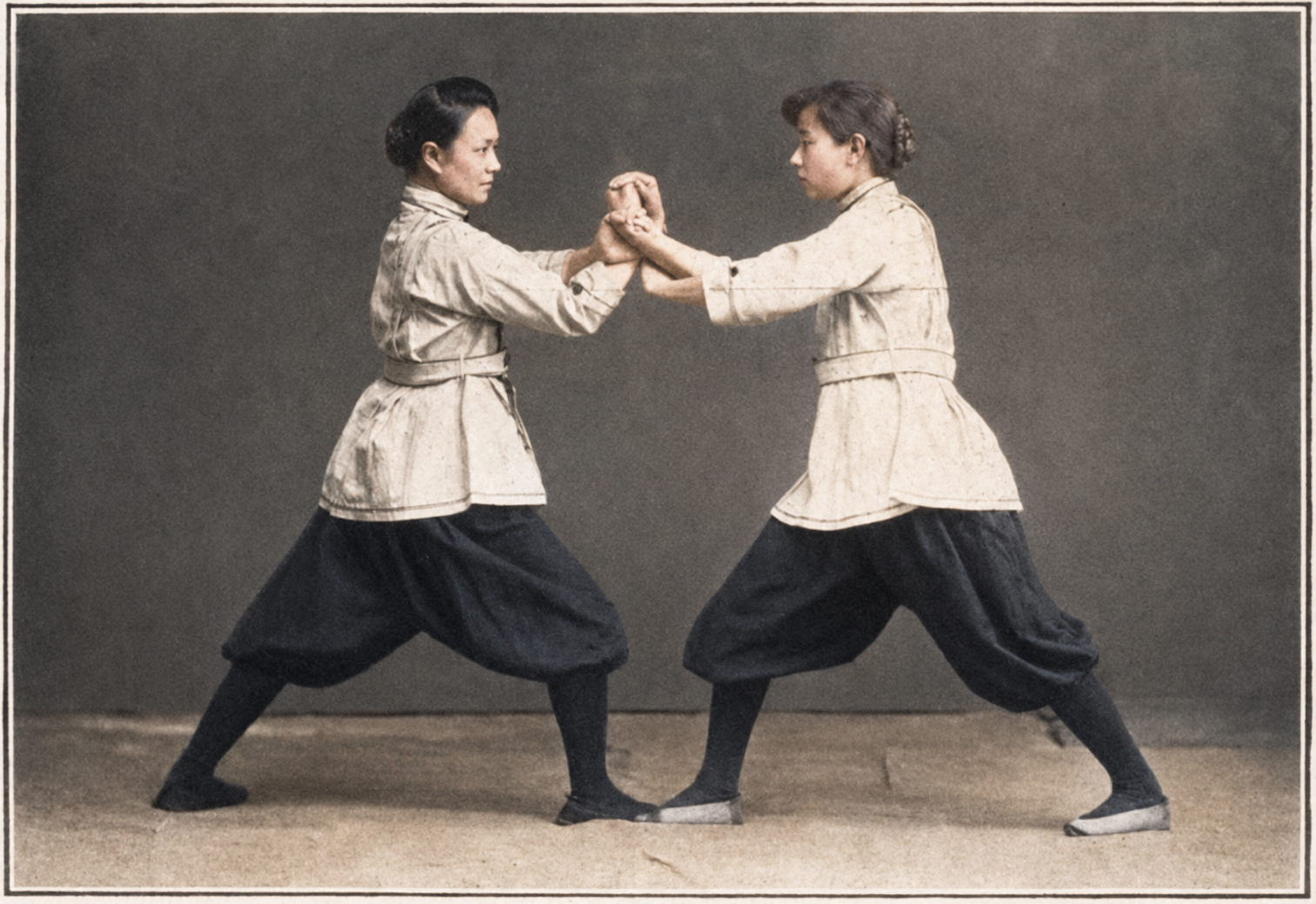
Cai Zhizhan (left) & Huang Wanxiang (right) (Colrized)
Chen Gongzhe and the Financial Foundations of Jingwu
Chen Shichao’s brother, Chen Gongzhe 陳公哲, was one of the most important administrators and financial supporters in the early history of Jingwu.
The Chen family came from a prosperous Guangdong background and belonged to Shanghai’s commercially successful Cantonese community. Chen Gongzhe became an early Jingwu member and was one of the principal figures responsible for sustaining and expanding the association. Jingwu required far more than martial arts instructors. It needed buildings, equipment, salaries, publications, administrative staff and funds for expansion.
Much of this support came from three wealthy businessmen:
Chen Gongzhe
Lu Weichang
Yao Chanbo
Together, they became known as the “Three Corporations.” These three men were the association’s principal financial pillars. Their commercial profits supported Jingwu’s daily operating expenses, publications, facilities, public events and expansion into new regions.
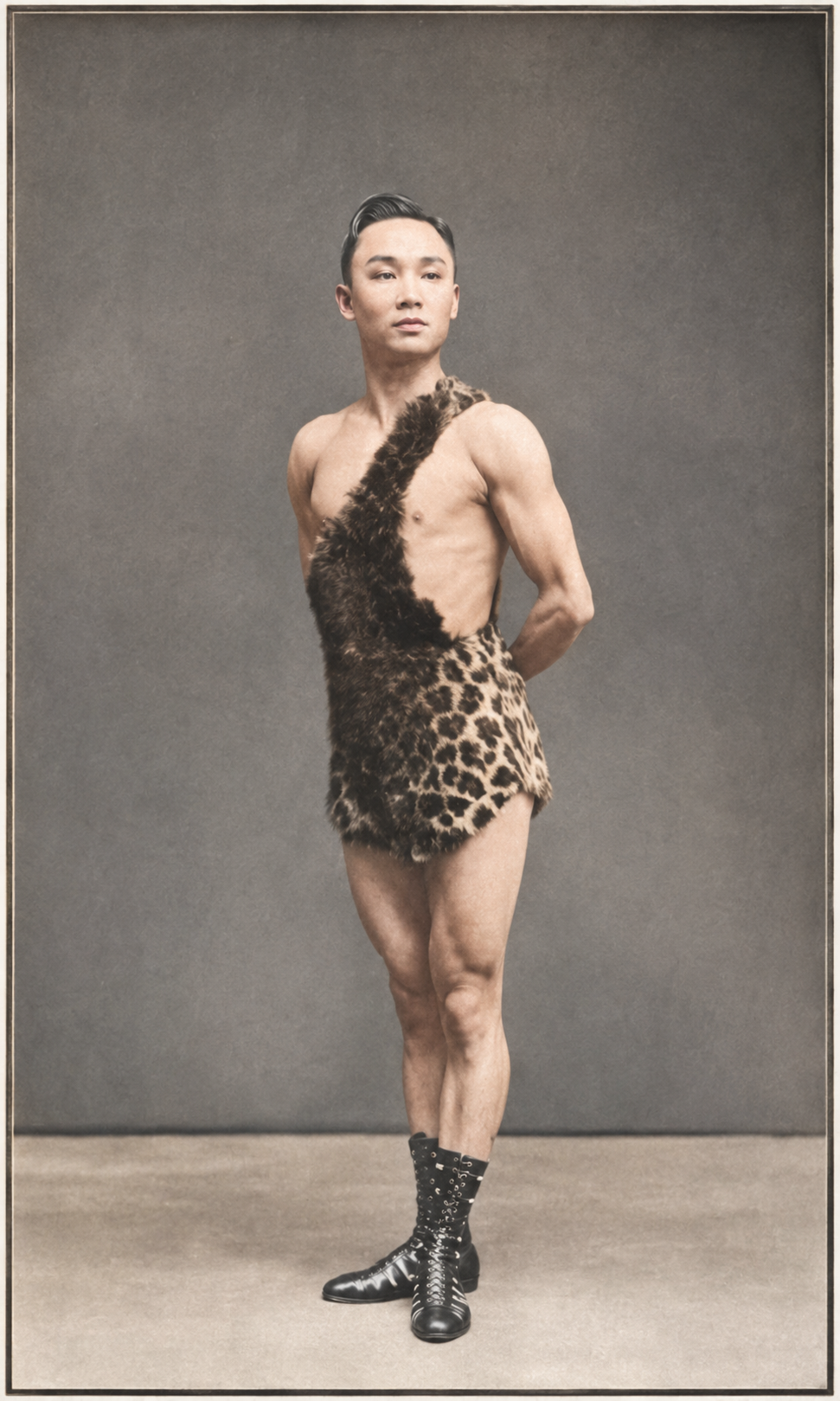
Chen Gongzhe (colorized)
This dependence also left Jingwu dangerously vulnerable.
In 1924, the private business ventures associated with the Three Corporations failed. Chen Gongzhe and the other principal backers suffered severe losses and were bankrupted. Because the Shanghai Jingwu organisation relied upon them for a substantial part of its operating budget, their financial collapse produced a corresponding institutional crisis. The association’s first great period of expansion came to an end.
By this time, Jingwu branches had already been established elsewhere in China and Southeast Asia, and some of these continued with a degree of independence. It is therefore more accurate to say that the financial disaster crippled the original Shanghai organisation than that the entire international movement immediately disappeared. Nevertheless, the crisis demonstrated how dependent even an idealistic martial organisation remained upon commercial realities.
Martial principles did not pay instructors, print books, maintain buildings or purchase equipment. Jingwu’s rapid growth had been made possible by a network of wealthy patrons and successful businesses. When that economic foundation collapsed, the scale of the original project could no longer be maintained.
A Lasting Legacy
Chen Shichao and the women of Jingwu occupied an important transitional moment in the history of Chinese martial arts.
They trained at a time when public martial education was still relatively new and when organised martial training for women was particularly radical. Their participation helped establish the principle that Chinese martial arts were not exclusively male possessions.
The inauguration of the Ladies’ Department was therefore more than an entertaining afternoon of boxing, weapons and gymnastics. It represented the opening of a door. Chen Shichao helped force that door open, and the women who stepped through it showed that they intended to practise everything the men practised and to be recognised as martial artists in their own right.
I am going to present a full Kung-Fu Explained episode on the Chin Woo (Jingwu) Association in the future. In the meantime, if you are interested in its history, I recommend the excellent book Jingwu: The School that Transformed Kung Fu by the late Brian Kennedy and Elizabeth Guo.
Here I present the North-China Herald article in full.
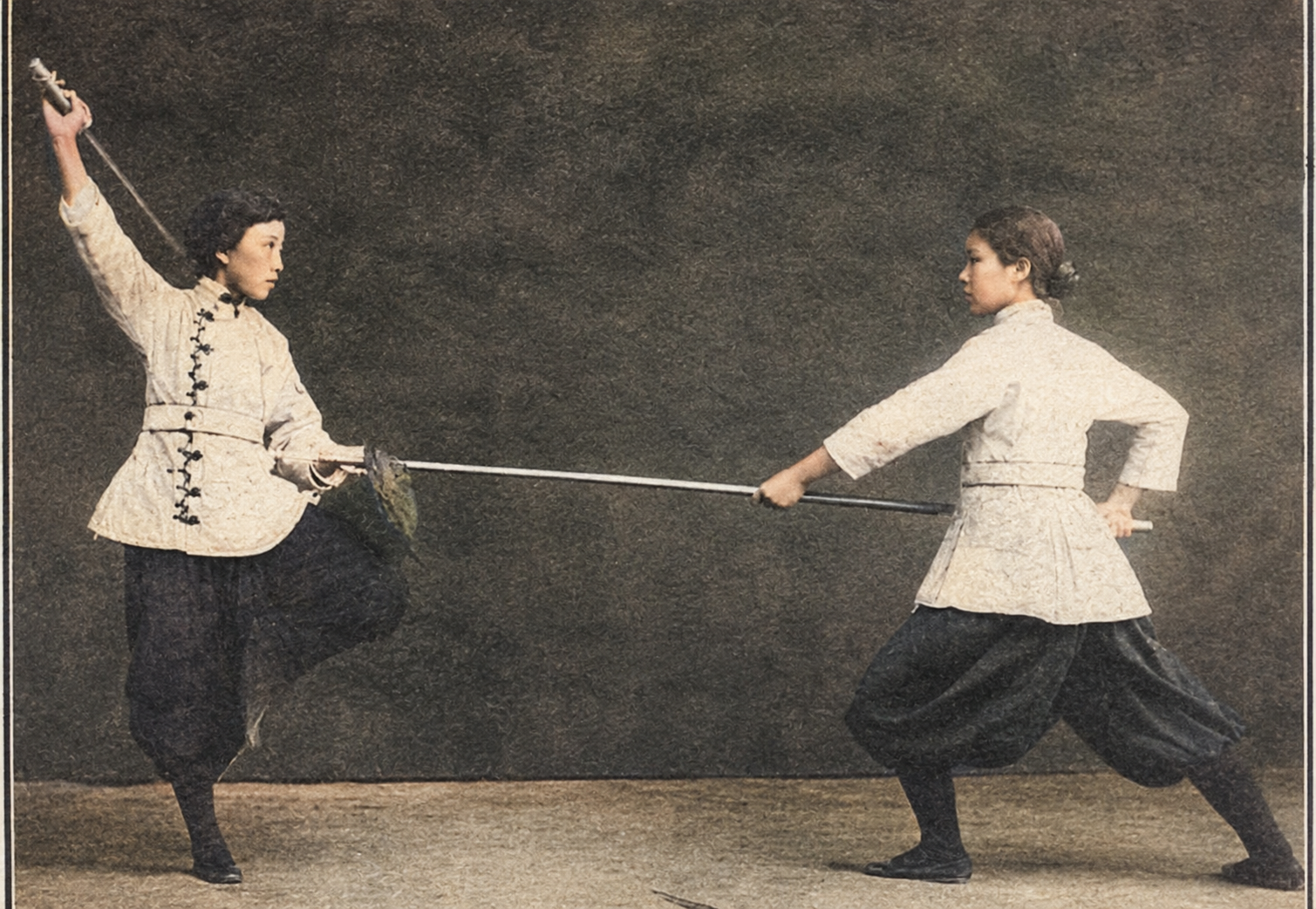
Chen Shichao (left) (Colorized)
CHINESE GIRL ATHLETES
FORM AND FASCINATION
“During the first month we girls took to physical culture, we felt as if we were as stiff as dried bamboos and could not move.”
Such was the opinion of a young member of the Ladies’ Department of the Chin Woo Athletic Association.
The formal inauguration of this Department was held at the Young Men’s Christian Association on Saturday afternoon and a very enjoyable programme was performed. About 80 girls took part in the exhibitions. Mr. S. S. Chow, English Secretary of the Club, presided over the gathering. More than 800 visitors were present.
It was extraordinarily fascinating to see these young girls come out and deliver addresses and give exhibitions of boxing. It showed that the girls of to-day are indeed different from the girls of twenty years ago. In those days few girls dared to show their faces in public. But nowadays . . . ! The united dancing drill by three entire schools was excellent. The girls were thoroughly trained and the instructors deserve all the praise for the smart work the girls showed. One learns that the girls met on two occasions only to go through their practice together. To show that foreign drill and calisthenics are not neglected, there were also exhibitions of both these, to the great credit of the girls.
SOME BOXING.
The Chinese boxing, however, was the feature of the day. Girls whose ages ranged from six to 30 took part in the display. With fists, feet, knives, swords, chains, clubs, staves, and what-not, they attacked each other with the fury of men in actual battle. As in all exhibitions of Chinese boxing, the girls showed that they knew how to use their feet—and use them well. They kicked their dainty little feet over their heads in such a manner as would put foreign dancers to shame. They did somersaults on the floor and in the air quite as well as any of the menfolk. “Turning the wind” jump and the “double kick” were exhibited with much grace and neatness. When two of the girls got together in a wrestling match, they went at it heart and soul. They were in some respects superior to the men. They fought in the same manner as the men and chopped “with the strength of nine.”
STRONGER AND PRETTIER.
“What methods of physical culture do you use most?” a representative of the “North-China Daily News” asked a member of the Club. “We put Chinese Kung-fu or boxing first,” was the immediate reply.
“How did you feel after taking exercise?”—“During the first month we girls took to physical culture we felt as if we were as stiff as bamboos and could not move. Instead of remaining stiff and weak as we were before taking exercise we gradually began to grow strong, muscular, less fat, more active, and in all we found that we were more efficient. We could eat more and sleep more soundly. We can study harder, and can work for 15 or 16 hours a day without feeling the least tired. Don’t you think that proves that the exercise is beneficial to us?”
“And another thing,” the speaker added rather shyly, “we find that we are prettier and our beauty increases as time goes on. We do not have to suffer growing old. Our bodily form and our style of walking or sitting are much improved.
“As I have just said we emphasize Chinese boxing; from the smallest to the oldest or strongest. We can play football as well as any of you men.
“Yes, it is stiff in the beginning and no real progress can actually be made until after a year or so.”
“Why do you like Chinese boxing?”—“Because we find that in using the Chinese methods of boxing and the old-fashioned Chinese swords and other implements of warfare, every one of our muscles is brought into force.”
“Do you have any forms of foreign exercise?”—“Yes. We play tennis, volley ball, basket ball, rings, and other sorts of foreign gymnastics and games. Of course, you must understand that while we put Chinese boxing first, we do not preclude others from playing just as they please. If a girl wishes to play a certain game, she is at liberty to do so. However, we do not have calisthenics in our Club.”
A FLOURISHING CLUB.
The Club has a membership of about 250, and members’ ages range from four years to 40. Half of the membership are schoolgirls while the other half are ladies from various families.
The Chin Woo Club was established a little more than ten years ago in very modest buildings. To day it owns some 30 mow of land, some of which was presented to the Club. On this land are two buildings at present but it is hoped to build 20 more later on. There is a large football field, a Chinese park which has not yet been completed, and a “model village” will be erected some time next year, where there will be a public library. At present some Tls. 90,000 has been put into the Club.
Modern sanitary appliances and baths have been installed, and it is hoped to make the Club as complete in every particular as possible within the next five years.
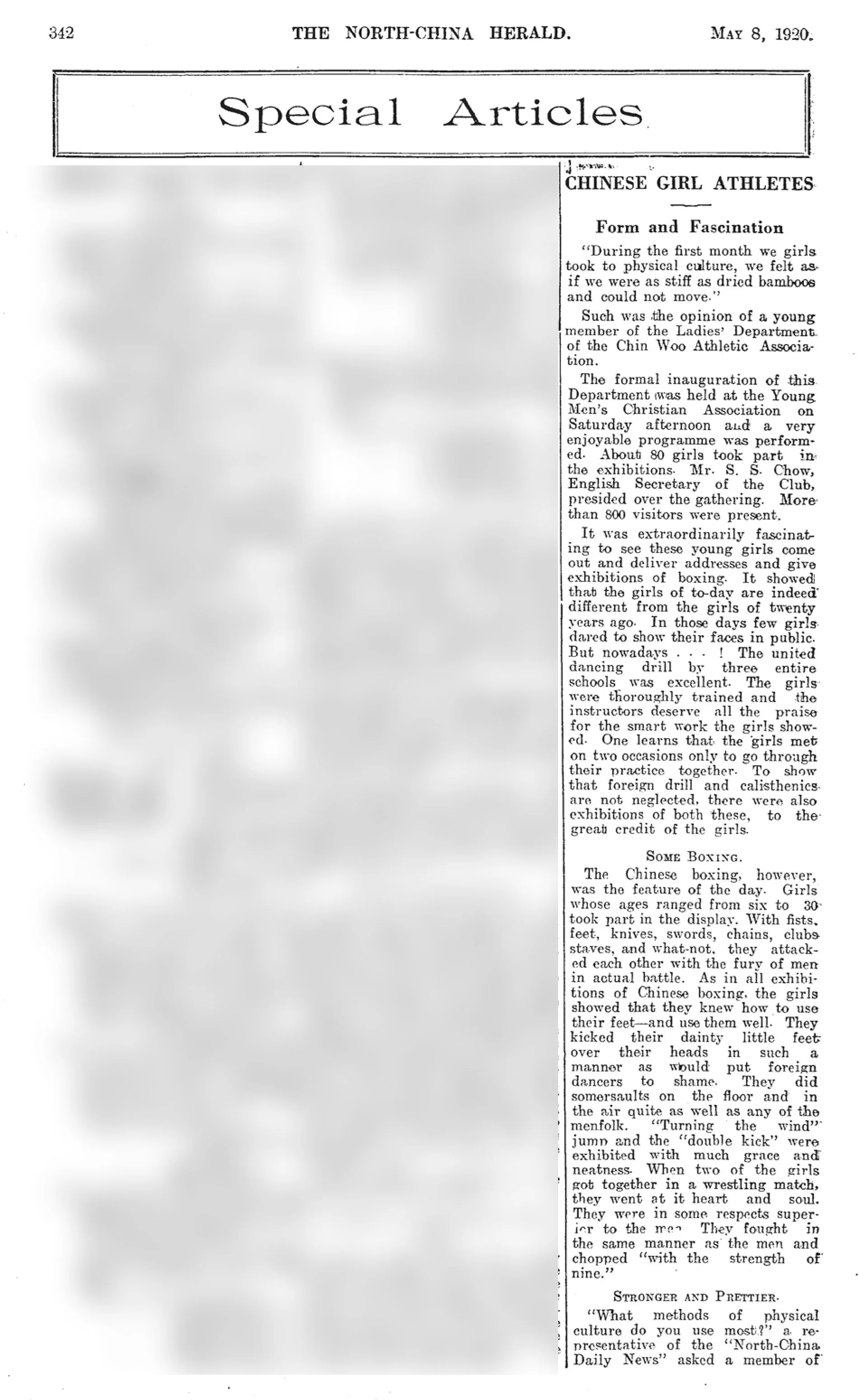
Original article (1)
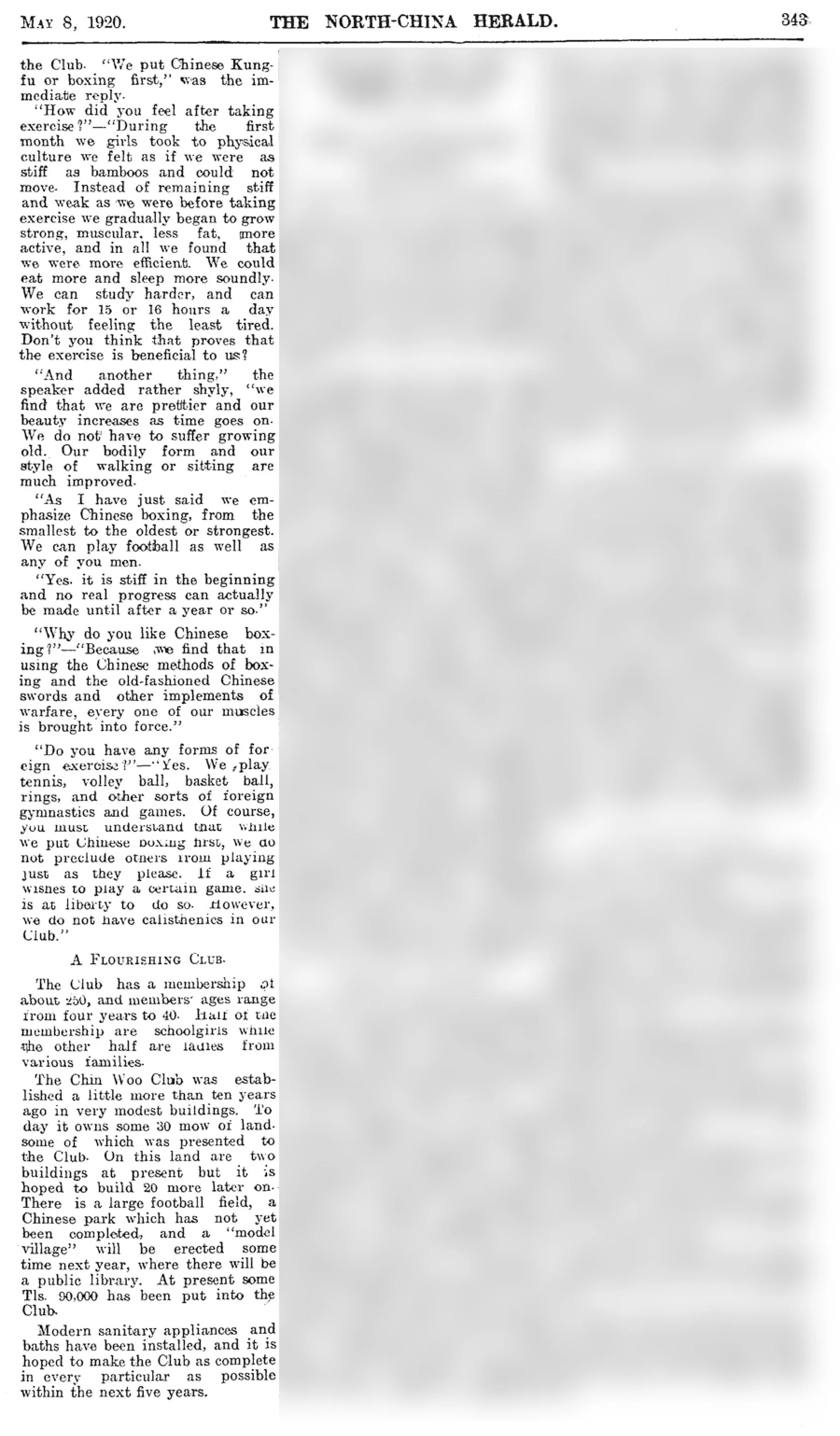
Original article (1)
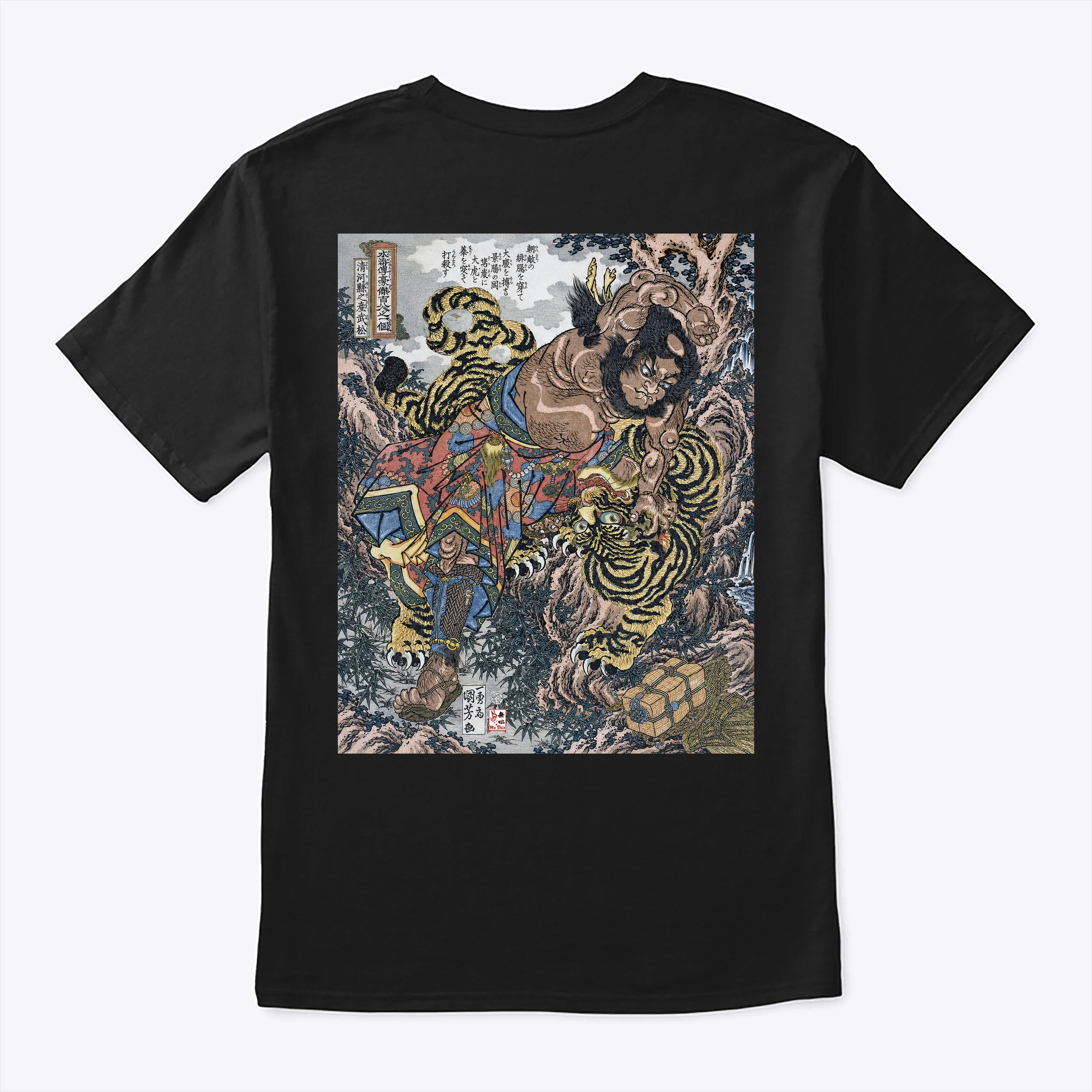
Step into the fierce world of Water Margin 水浒传 with this striking T-shirt featuring a classic Japanese woodblock print of Wu Song, “The Tiger-Slaying Hero”, one of the most legendary heroes of the Chinese literary tradition. Captured in the iconic moment where he battles the tiger on Jingyang Ridge, this design embodies raw courage, heroic strength, and the untamed spirit of martial culture.
Rendered in a dramatic ukiyo-e style, the artwork brings together Chinese heroic lore and Japanese woodblock artistry, making it a powerful statement piece for fans of martial arts, classical Asian literature, history, and bold traditional art.
A tribute to one of the great warrior figures of Water Margin, this shirt is perfect for those who appreciate courage, mythic strength, and timeless martial imagery.
The artwork used for this shirt is based on an early 19th-century Japanese woodblock drawing by Kuniyoshi.
The warrior Wu Song is depicted subduing a tiger, with his fist raised over his head, ready to strike the animal down. This tale has influenced martial artists in China for hundreds of years in both spirit and action.
Featuring the warrior on the back, allowing the full impact of the woodblock artwork to stand on its own. The front of the tee is kept clean and understated, marked with the brush-calligraphy characters 水浒传 (Shui Hu Zhuan) — The Water Margin — anchoring the piece firmly within the classical tradition that inspired it.
Printed on high-quality cotton, this shirt is available in two classic colorways: white and black, chosen to complement the artwork and echo the natural tones of historical paper and ink.
Subdue the Tiger — a living chapter from the Water Margin.
Available in white and black
See size chart for sizing