
A Short-Lived Boxer Revival in Sichuan, 1923 - The North China Herald (6)
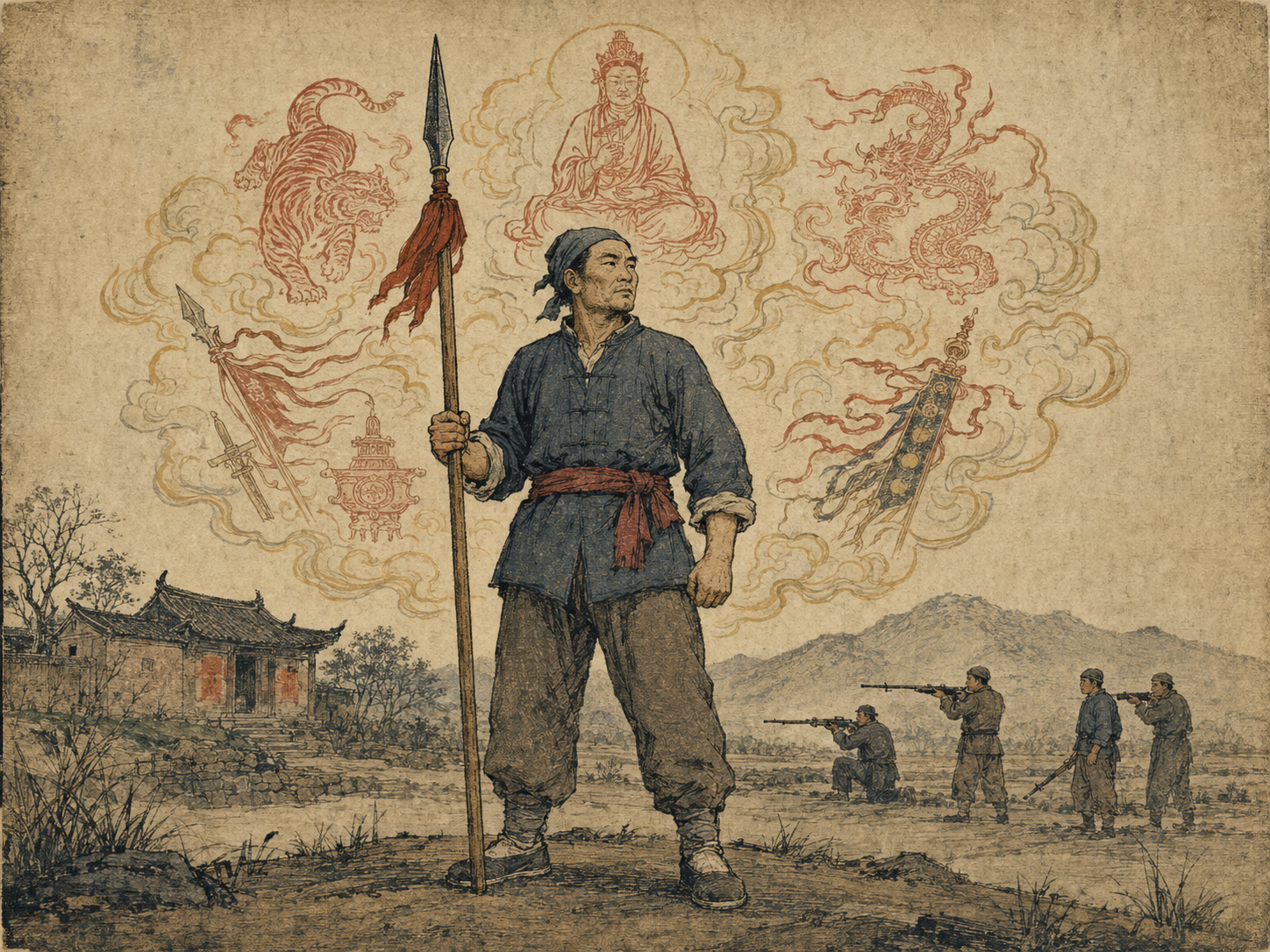
More than two decades after the violent suppression of the Boxer Uprising, echoes of the movement could still be found in rural China.
On 7 April 1923, the North-China Herald published a remarkable account under the title “A Short-Lived Boxer Revival.” The report described how a farmer in Sichuan had become a Taoist priest, proclaimed himself an emperor and gathered approximately one hundred followers. Among them were several young women whom he promised to dress in silks and satins once his new kingdom had been established.
The episode was brief, localised and ultimately unsuccessful. Nevertheless, its combination of martial organisation, religious authority, imperial ambition and belief in supernatural protection provides a fascinating glimpse into the persistence of Boxer-like ideas during China’s turbulent Warlord Era.
It also highlights a common misunderstanding: that groups identified as “Boxers” or “Spirit Soldiers” (Shenbing 神兵) necessarily consisted of accomplished practitioners of established Chinese martial arts. Although such movements incorporated boxing, weapons and other martial practices and some participants may have possessed genuine fighting experience, membership in them should not automatically be equated with serious or systematic martial training.
These groups were martial-religious movements in which physical practice became intertwined with spirit possession, ritual initiation, charms and promises of supernatural protection. Followers might be told that divine forces could possess their bodies, transform them into superior warriors or render them immune to blades and bullets. Such beliefs gave poorly armed people the confidence to confront opponents equipped with modern firearms, often with disastrous results.
This was very different from the sober realities encountered through sustained martial training. Serious practice develops skill through repeated physical experience and exposes practitioners to the limitations of the human body, the unpredictability of combat and the practical consequences of confronting armed resistance. No amount of ritual confidence could compensate for inadequate training, poor organisation or inferior weaponry.
The presence of fists, kicks and traditional weapons therefore did not, by itself, make these followers representative of Chinese martial arts as a whole. Their activities belonged to a particular martial-religious environment in which physical techniques were subordinated to claims of divine possession and supernatural invulnerability.
The North-China Herald report
The article appeared in the North-China Herald on 7 April 1923, although the report itself was sent from “Junghsien, Sze.” on 26 February. “Sze.” was an abbreviation for Sichuan, while Junghsien appears to refer to modern Rong County, or Rongxian (荣县), in south-central Sichuan.
Below is the article, transcribed in full:
A SHORT-LIVED BOXER REVIVAL
Self-Styled Emperor’s Defiance With 100 Men and Women: Prompt Suppression
From Our Own Correspondent.
Junghsien, Sze., Feb. 26.
Last week, there was another local thrill, which afforded talk for the tea shops and the guest table. For a considerable time a farmer on the western border of the county, who had become a Taoist priest, has been organizing a little band, somewhat after the fashion of the “Boxers.” He announced himself as an “Emperor” and it is said he had gathered a band of about 100. Among these he had collected quite a number of young women, whom he promised to dress in silks and satins when he established his kingdom. From time to time he made levies for money upon the local people and was apparently becoming a little bolder in his operations.
For a long time the people of the neighbourhood were too much in fear of the “Emperor” to lay accusations against him, so that no notice was taken by the officials. More recently, a landlord of the district in which he had his gang exhorted him to desist from his works and as thanks for his boldness was killed. The murdered man’s brother thought matters had gone far enough, so he came into the city and made known the facts.
Magistrate Wang, though an elderly scholar of the old school, is not lacking in energy, and he immediately set out with a small force of the local militia. They found the “Emperor” in a fortress in the hills and a warning painted upon the rocks for no one to approach, on pain of death. However, the militia approached the fort and called upon the inmates to come out and surrender, but were answered with execrations and taunts. A volley was fired into the air to frighten the folks in the fort, but they, believing themselves immune to bullets, replied with their two rifles.
The soldiers then fired on them in earnest. The leader was mortally wounded, a number of his followers were killed or wounded and in the attempt of the others to escape a number were taken. One of the “queens,” an unmarried woman of 23, was sent by the magistrate to the mission hospital with a badly fractured leg, necessitating amputation. We have been unofficially informed that, if her life is saved, the magistrate will not punish her severely, considering that she has learned a lesson, and probably going about with one leg will be sufficient warning to others to avoid such parties. The gang was broken up and scattered. Their arms consisted of two rifles and two spears.
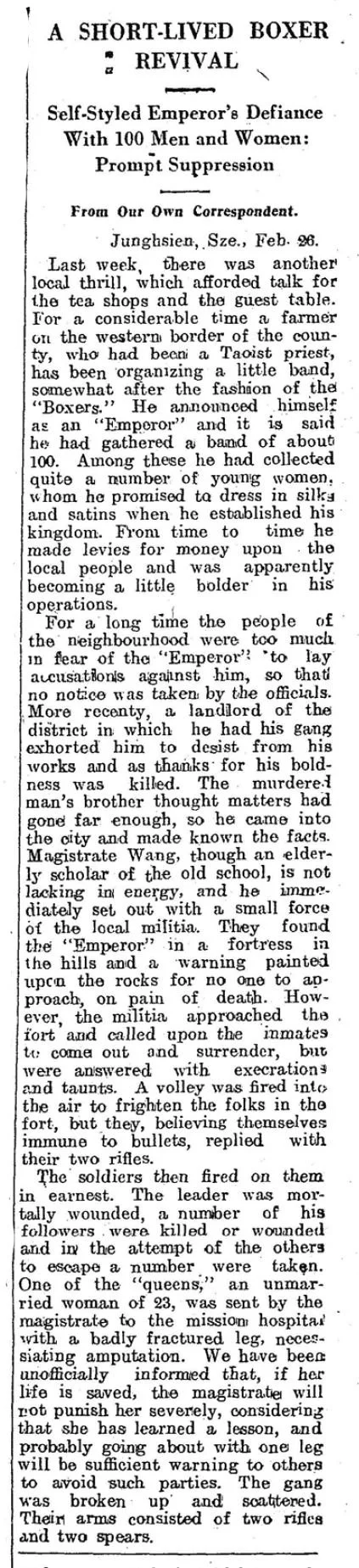
The original article as it appeared
Was this really a Boxer revival?
The correspondent compared the group to the “Boxers.” The leader was said to have organised his band only “somewhat after the fashion of the ‘Boxers.’”
The Boxers who became prominent in northern China during the closing years of the Qing dynasty were not a single, centrally controlled organisation. Groups identified as the Boxers, the Righteous and Harmonious Fists, or the Righteous and Harmonious Militia drew upon a complicated mixture of village self-defence, popular religion, spirit possession, ritual practice and Chinese martial arts. Some participants believed that divine possession and the performance of particular rituals could protect them from blades and gunfire. This supposed invulnerability was commonly expressed through the idea of dao qiang bu ru (刀枪不入); literally, that sabres and spears could not penetrate the body.
The group described in Rong County displayed several comparable characteristics. Its leader was a farmer who had become a Taoist priest; his followers gathered in a fortified position in the hills; and, most significantly, they reportedly believed themselves immune to bullets.
Nevertheless, the article says nothing about the group opposing foreigners or Christianity. Nor does it mention the famous Boxer slogan “Support the Qing and destroy the foreigners” (扶清灭洋). Indeed, the Qing dynasty had ceased to exist more than a decade earlier. Rather than restoring the Qing, the leader proclaimed himself emperor and promised to establish a kingdom of his own.
The label “Boxer” may therefore tell us as much about the perspective of the foreign correspondent as it does about the group itself. To an English-language newspaper operating in China, any martial-religious organisation claiming supernatural protection from firearms would readily have recalled the events of 1900.
The Boxer Uprising itself was considerably more complex than the familiar image of superstitious martial artists attempting to fight modern armies with fists and traditional weapons. Its origins, practices, internal diversity and relationship with Chinese martial culture deserve a much deeper examination. I will be exploring these subjects in a forthcoming instalment of my Kung Fu Explained video series, together with future articles examining the movement and its martial dimensions in greater detail.
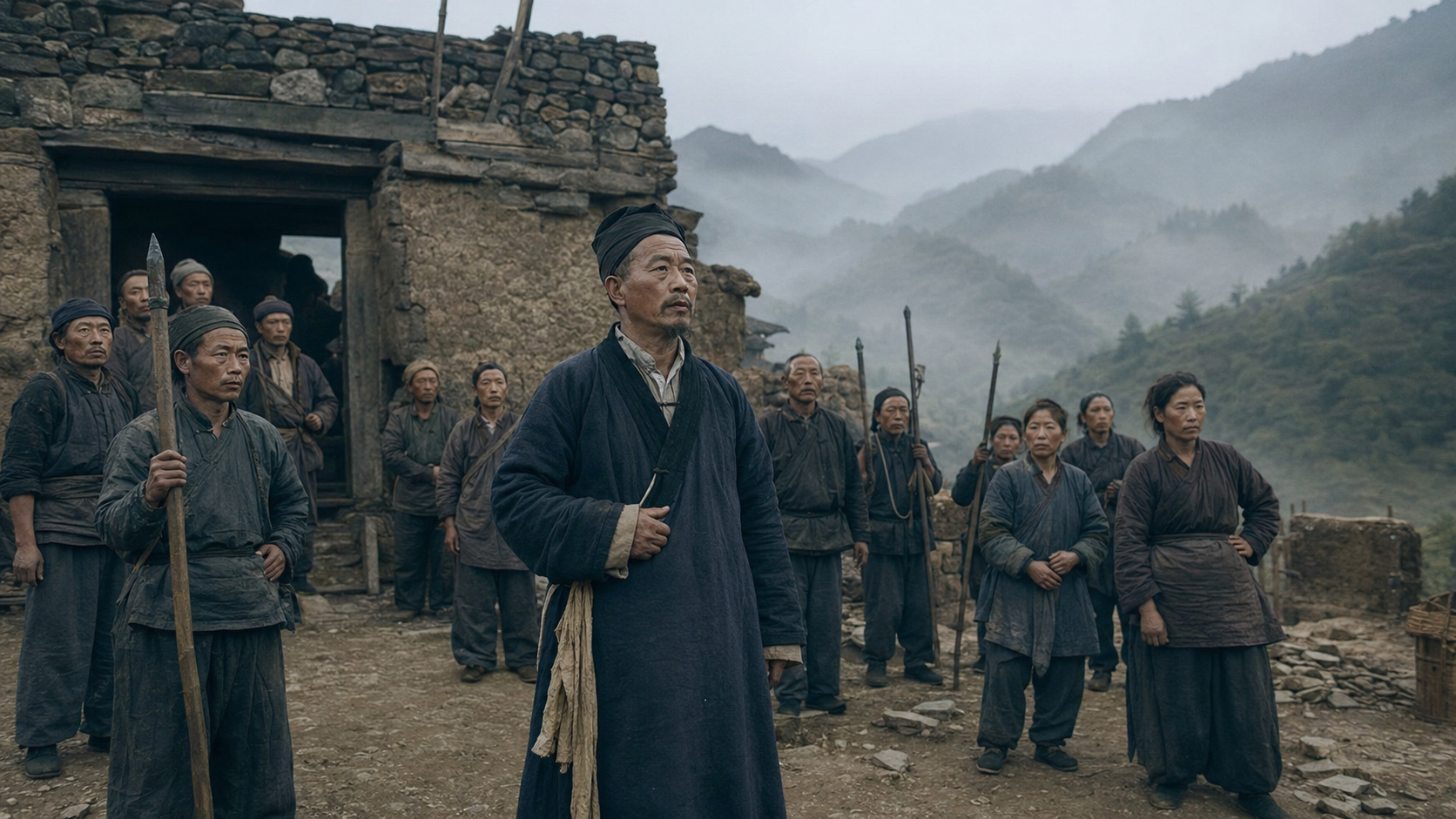
Digital recreation
An emperor in the hills
The political ambitions of the self-proclaimed emperor are among the most intriguing elements in the account. They were also part of a recurring pattern among religious and millenarian movements throughout Chinese history.
China was then in the midst of the Warlord Era. Although the Republic of China formally existed, political and military power was fragmented among competing regional authorities. Sichuan was particularly divided, with numerous military leaders, local commanders, militia organisations and armed associations competing for authority. Under such conditions, the distinction between religious leader, militia commander, bandit chief and political rebel was not always clear.
The Rong County leader apparently collected money from the surrounding population and became increasingly confident in his operations. According to the article, local people were sufficiently frightened that they initially refused to report him to the authorities. Action was taken only after a local landlord confronted the group and was killed.
By assuming the title of “Emperor,” the leader placed his movement within a much older tradition of religious and millenarian rebellion. Throughout Chinese history, charismatic figures had proclaimed the arrival of new dynasties, claimed divine sanction or promised to establish kingdoms that would replace an existing order they portrayed as corrupt or illegitimate.
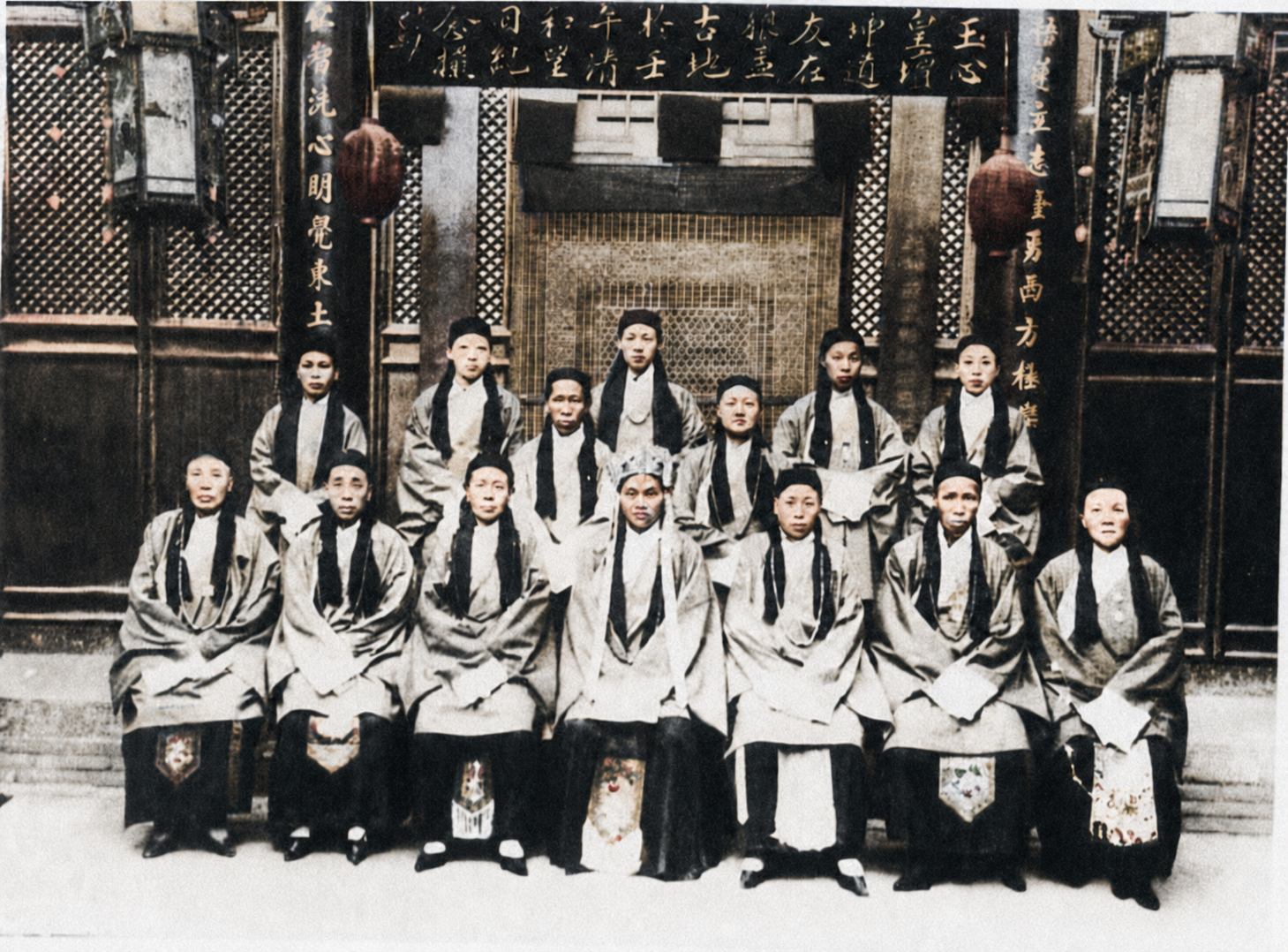
Photo of the Red Lanterns (digitally restored)
Women within the movement
The presence of “quite a number of young women” deserves particular attention. Women had also participated in the Boxer movement. The best-known female Boxer organisation was the Red Lanterns (Hóng Dēng Zhào 紅燈照), whose members were generally described as young women believed to possess supernatural abilities. It would be tempting to interpret the women in Rong County as a continuation of these Boxer traditions. The surviving evidence, however, is insufficient to establish such a connection. The newspaper does not describe their training, duties, rituals or position within the group. It tells us only that they were promised fine clothing in the future kingdom and that at least one was called a “queen.”
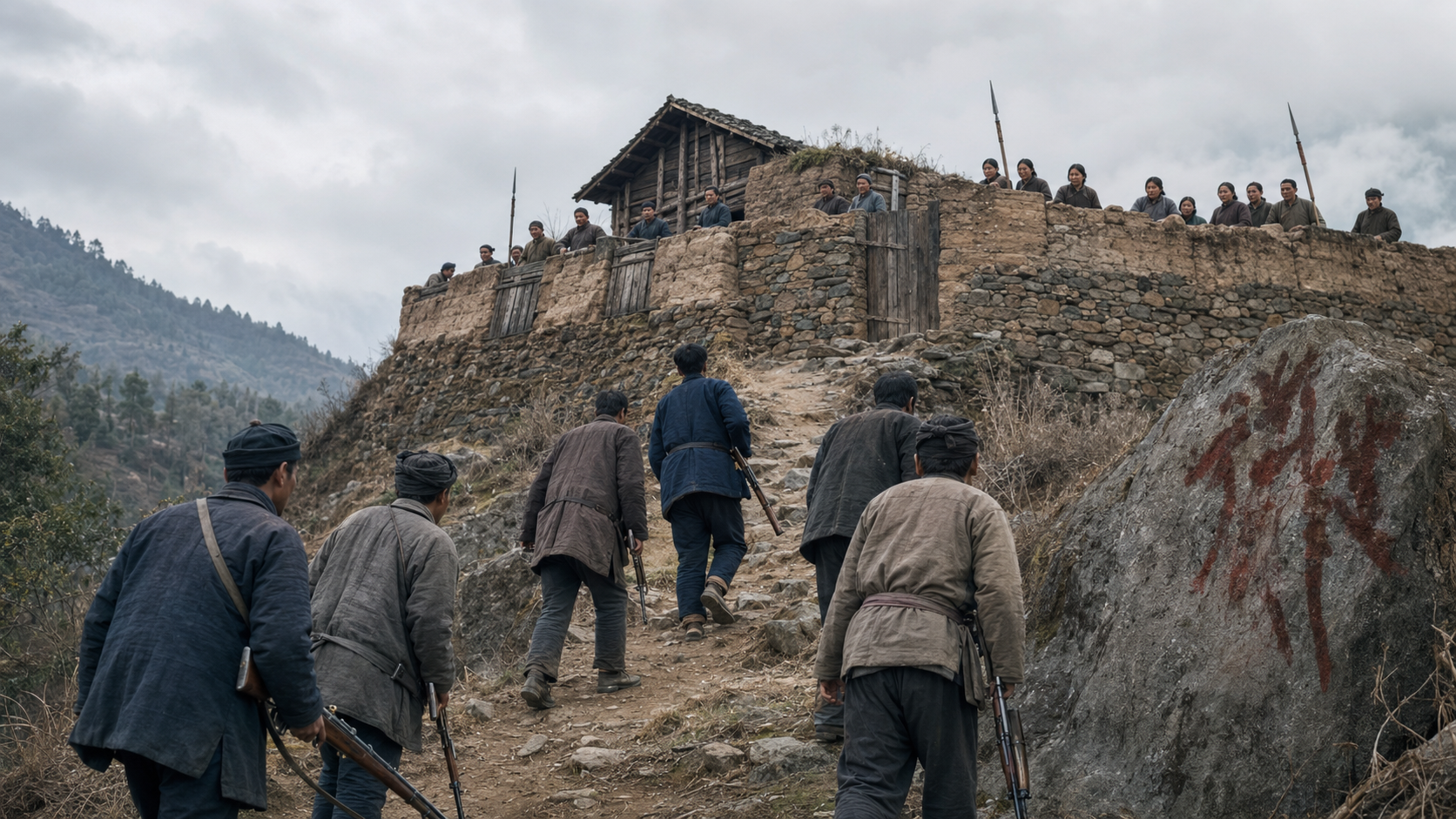
Digital recreation
Martial arts, ritual and invulnerability
The article provides few details about the group’s actual martial practices. Its entire armoury, according to the correspondent, consisted of two rifles and two spears.
Claims of invulnerability are often presented as examples of simple ignorance or superstition. Yet within movements such as the Boxers and Spirit Soldiers, ritual protection performed several functions. It gave frightened and poorly armed people the courage to confront opponents equipped with modern firearms. It strengthened group identity, legitimised leaders and transformed ordinary farmers into members of what they believed was a divinely protected force.
Martial practice, religious ritual and spirit possession could become intertwined. These movements were not necessarily “martial arts schools” in the way that term is understood today, nor should they be treated as representative of China’s established martial traditions. While some Boxers were indeed practitioners of recognised Chinese martial arts systems, participation in such movements did not necessarily indicate extensive or systematic martial training.
This does not mean that traditional Chinese martial artists generally believed themselves impervious to weapons, nor were claims of supernatural invulnerability representative of Chinese martial arts as a whole. Such beliefs belonged to particular social, religious and political environments in which martial practices were combined with ritual, collective mobilisation and promises of divine protection.
A surviving echo of the Boxers
The affair was minor when compared with the great political and military upheavals of the period. It involved only around one hundred followers and was suppressed by a small local militia force. To the correspondent, it was little more than a “local thrill” that provided conversation in teahouses and around dinner tables.
Yet the story is historically significant precisely because of its small scale.
It shows that the relationship between martial arts, popular religion and political rebellion did not end with the suppression of the Boxers in 1900. Similar ideas continued to circulate through rural communities and could be revived whenever charismatic leadership, political disorder and local grievance combined. Whether the Rong County group represented a true Boxer revival, an isolated religious movement or a distant expression of the same conditions that produced the Spirit Soldiers remains uncertain.
The rebellion was short-lived, but the beliefs underlying it had a much longer history.
Real Iron Body—No Magic Required
True body conditioning does not depend upon talismans, spirit possession or promises of supernatural invulnerability. It is developed gradually through correct, consistent physical practice.
Our custom-made Iron Body Pai Da Metal Brush is a traditional conditioning tool designed for progressively striking and conditioning the limbs and torso. When used properly, it can help develop a genuinely better-conditioned body with greater tolerance and resilience to controlled impact - - no fake magic or superstition required.
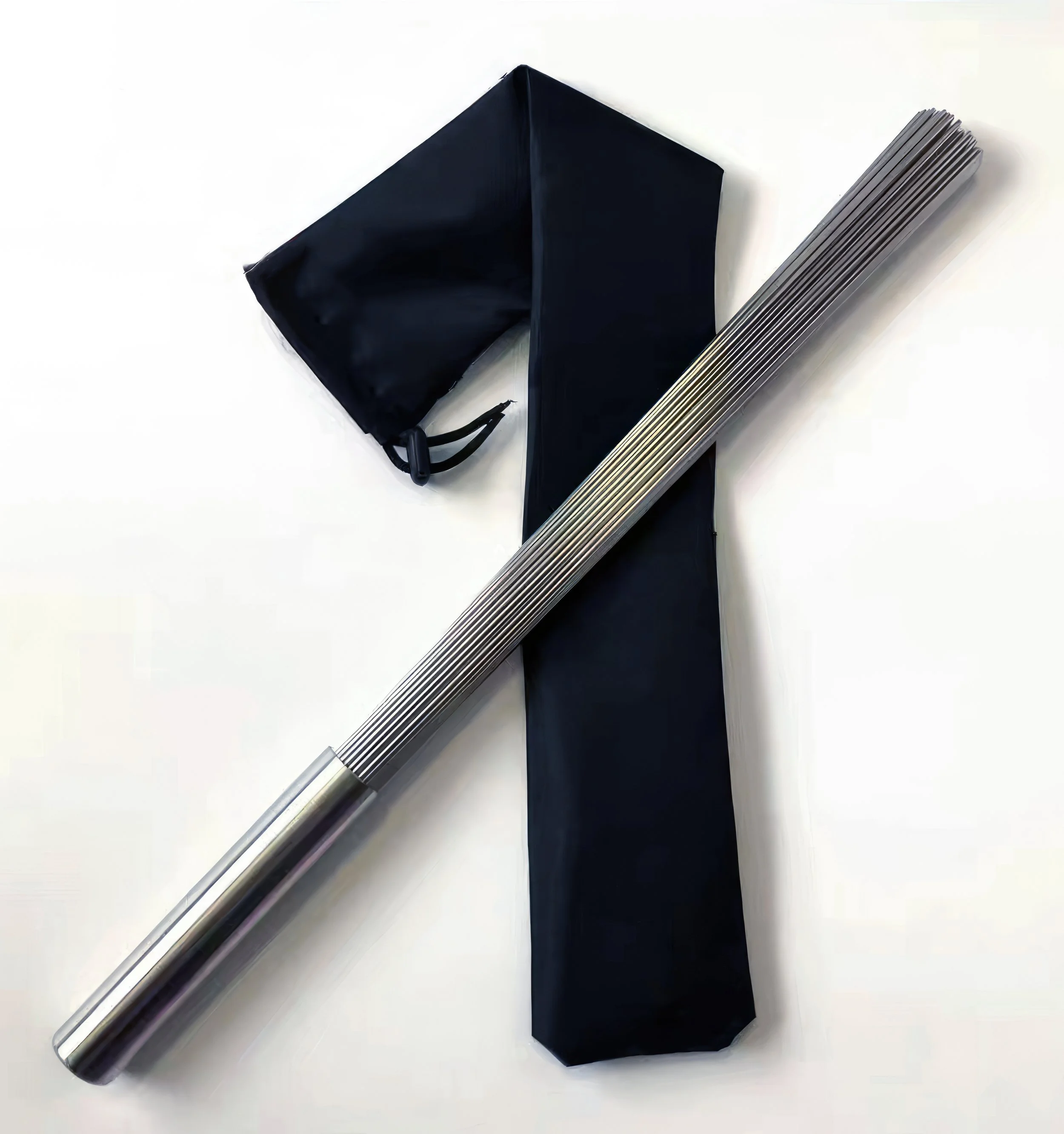
The metal brush (pai da bang) is a traditional tool utilized for iron body conditioning as well as health building practices dating back to antiquity in China. It is the ultimate tool to develop a well conditioned body, enabling you to effectively condition your limbs as well as your torso etc. In addition to the conditioning benefits, within traditional Chinese medical theory it is believed to promote good health as the patting and striking of meridians promotes their function and circulation throughout the body.
Our Iron Body Pai Da Metal Brush is custom made for us and is crafted from the highest quality stainless steel materials and built to last. Featuring a polished steel handle and a carrying bag.
NOTE:
Should your country of delivery not display at checkout, please do contact us directly to process your order.
Should you wish to use expedited delivery such as Fedex etc. please do contact us directly to process your order.
Check your local laws prior to ordering
References
“A Short-Lived Boxer Revival: Self-Styled Emperor’s Defiance With 100 Men and Women: Prompt Suppression,” North-China Herald, 7 April 1923.
Lucien Bianco, Peasants Without the Party: Grass-Roots Movements in Twentieth-Century China. M. E. Sharpe, 2001.
Jerome Ch’en, The Highlanders of Central China: A History, 1895–1937. M. E. Sharpe, 1992.
Jean Chesneaux, ed., Popular Movements and Secret Societies in China, 1840–1950. Stanford University Press, 1972.
Duan Yongsheng and Lin Hao, “民国海关档案中的川东‘神兵’事件” [The Eastern Sichuan “Spirit Soldier” Incident in Republican-Era Maritime Customs Archives], Journal of Panzhihua University, vol. 39, no. 6, 2022, pp. 76–83.
Joseph W. Esherick, The Origins of the Boxer Uprising. University of California Press, 1987.
Hsüan-chih Tai, The Red Spears, 1916–1949. Center for Chinese Studies, University of Michigan, 1985.