Dong Haichuan’s Tomb Restored: A Personal Link to Bagua Zhang History
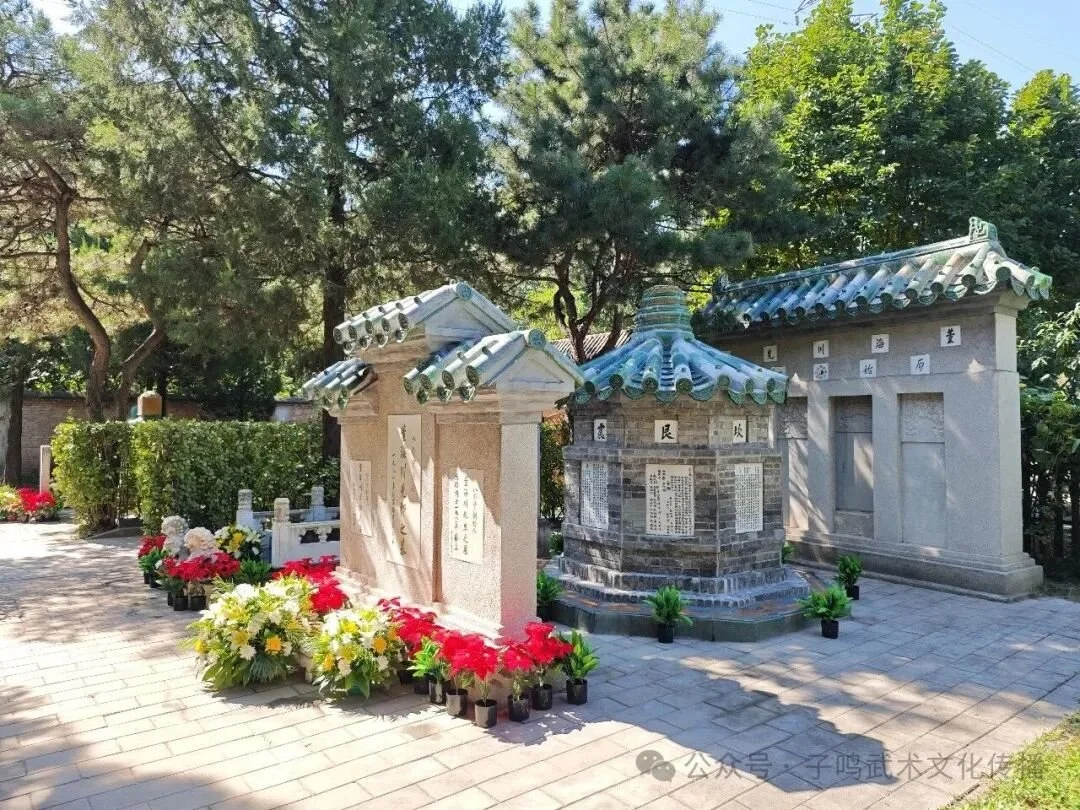
Dong Haichuan’s Tomb - Wan An Cemetery, Beijing
On 21 September 2026, Bagua Zhang practitioners gathered at Beijing’s Wan’an Cemetery to mark the completion of restoration work at the tomb of Dong Haichuan, the founder of Bagua Zhang.
This history has a personal connection for me. The restoration and relocation of Dong Haichuan’s tomb was an initiative of Li Ziming, my teacher Di Guoyong’s teacher. Di Guoyong was among those who excavated the tomb at its original location and helped move Dong Haichuan’s remains and the stele to the new tomb.
The recent restoration was initiated and organised by my martial aunt Li Xiuren, Li Ziming’s daughter. As I was not able to be there in person and assist with the restoration work, I made a small financial contribution to the restoration and renovation works as its my responsibility as an inheritor Bagua Zhang to assist with the maintenance of the tomb of the founder of our art.
The ceremony brought together representatives of several branches of Bagua Zhang, descendants of early masters, and others involved in the tomb’s relocation. Those present also heard a recording of Li Ziming speaking at the tomb’s dedication 45 years earlier.
Below is my full English translation of the post regarding the ceremony on Li Xiuren’s official Chinese social media profile.
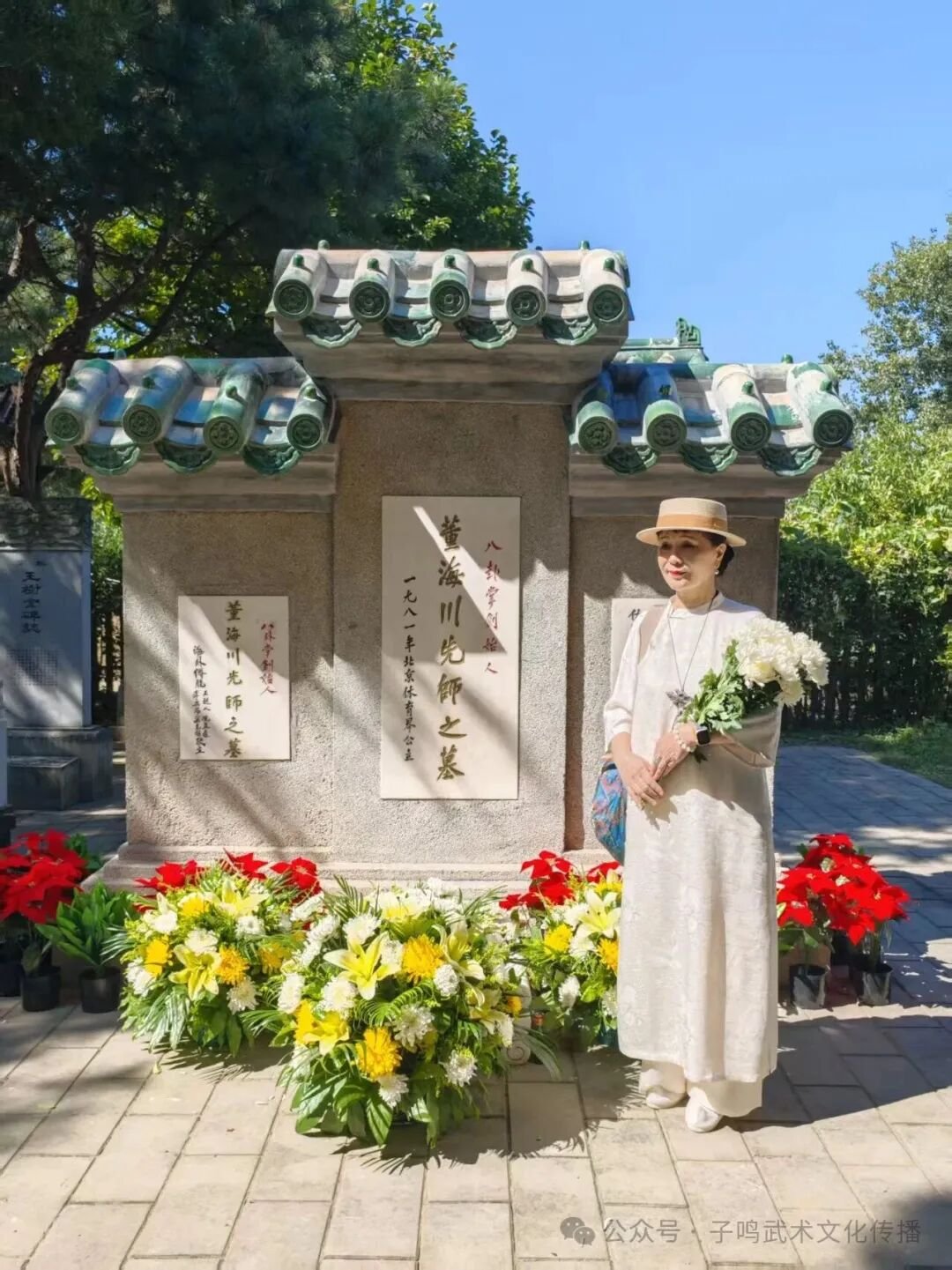
Li Xiuren in front of the renovated tomb of Dong Haichuan
The Tomb Restoration Complete, We Remember Our Forebear; Palms Circle the Stele, Continuing the Tradition
By Jiuxuan · Translated into English
On 21 September 2026 (the eleventh day of the lunar month), in the pleasant autumn weather and the fragrance of osmanthus blossoms, a ceremony marking the completion of restoration work at the tomb of Dong Haichuan, founder of Bagua Zhang, was held at Beijing’s Wan’an Cemetery.
Those attending included Kang Gewu, a ninth-duan Chinese martial artist, researcher at the Wushu Research Institute of the General Administration of Sport of China, and participant in the relocation and reconstruction of Dong Haichuan’s tomb; Wang Hong’en, vice president of the Beijing Wushu Association; Li Beida, deputy director of its Traditional Wushu Committee; and Xing Qiang, a full-time secretary of the association and deputy director of its Institutional Members Committee.
Also present were Wang Huibin, director of the association’s Wushu Theory and History Committee; Liu Mingliang, director of its Zhao-style Qinna Committee; Li Xuezheng, secretary-general of the Beijing Mingshengliang Martial Arts Research Association; Zhao Fengyong and Liu Yinsheng, deputy directors of the association’s Bagua Zhang Committee; Li Xiuren, a municipal-level representative inheritor of Bagua Zhang and director of the Bagua Zhang Museum; Li Xiuhui, daughter of the third-generation Bagua Zhang master Li Ziming; and Li Xiuzhi, founder and adviser of the Beijing Ziming Martial Arts Culture Communication Centre.
At the start of the ceremony, Li Xiuzhi presented a large floral arrangement she had personally commissioned in honour of Dong Haichuan. Yu Qian, a fifth-generation Bagua Zhang practitioner, reverently offered incense. Luo Fuqing, also a fifth-generation practitioner, poured fragrant baijiu before Dong’s memorial stele.
The ceremony fully reflected the respect Bagua Zhang practitioners hold for their teachers and forebears. Representatives of Beijing’s Yin, Cheng, Liang, Fan, Shi and Liu branches of Bagua Zhang all attended.
Of particular note were the presence of Shi Naijian, a descendant of the second-generation master Shi Jidong, and Liu Bingguang, a descendant of the second-generation master Liu Fengchun.
The ceremony was hosted by fifth-generation practitioner Fang Zhongzhi. Dressed in traditional clothing, he appeared vigorous and spoke in a calm, resonant voice, guiding the proceedings in an orderly manner.
The gathering began by listening to a recording of a speech given by Li Ziming at the dedication of Dong Haichuan’s tomb 45 years earlier. Li’s plainspoken, resonant words, coloured by his native accent, carried those present back to that remarkable time. Kang Gewu, who took part in the respectful relocation of Dong’s tomb in the early 1980s, was then a young man in his prime; today he is nearly eighty. He recalled the past with emotion and warmly praised the present restoration effort.
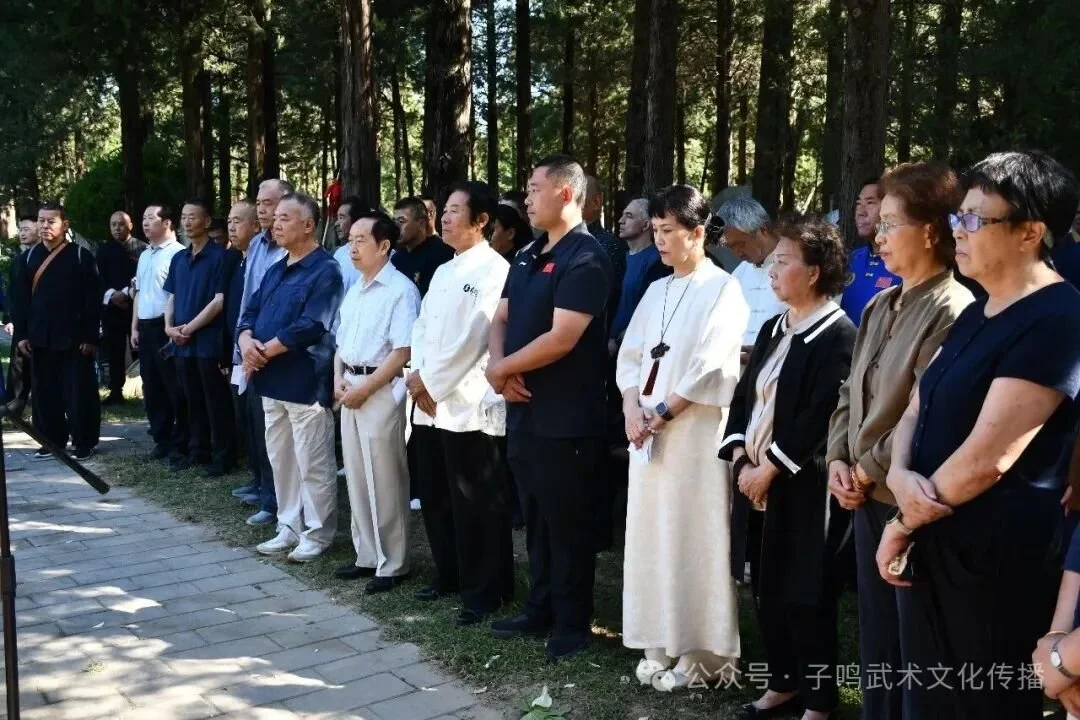
The ceremony
In an impassioned address, Beijing Wushu Association vice president Wang Hong’en spoke of Dong Haichuan’s immense contribution to Chinese martial arts and of the work earlier Bagua Zhang masters had done to promote the art. He urged later generations to carry forward that tradition. His words were deeply encouraging.
Li Beida, deputy director of the association’s Traditional Wushu Committee, read an official document from the Beijing Wushu Association. It affirmed and supported the voluntary restoration of Dong Haichuan’s tomb by the Beijing Bagua Zhang Museum and the Beijing Ziming Martial Arts Culture Communication Centre, undertaken in a spirit of respect for teachers and ancestors.
Li Xiuren, who led the voluntary restoration, spoke about the importance of Dong Haichuan’s tomb. She described it as a root of traditional martial arts and an expression of the nation’s spirit. She said that the tomb’s original construction had helped revive and develop traditional martial arts in Beijing and across China, giving it both immediate significance and lasting historical importance. She called on Bagua Zhang practitioners to use this occasion to strengthen their unity and advance the art, honouring both the founder who established it and the generations who passed it down.
Bagua Zhang practitioner Zhao Fengyong spoke on behalf of several of those attending. Li Xiuhui then read a congratulatory letter from Dong Yan, a 29th-generation descendant of the Dong family of Kaikou, Hebei.
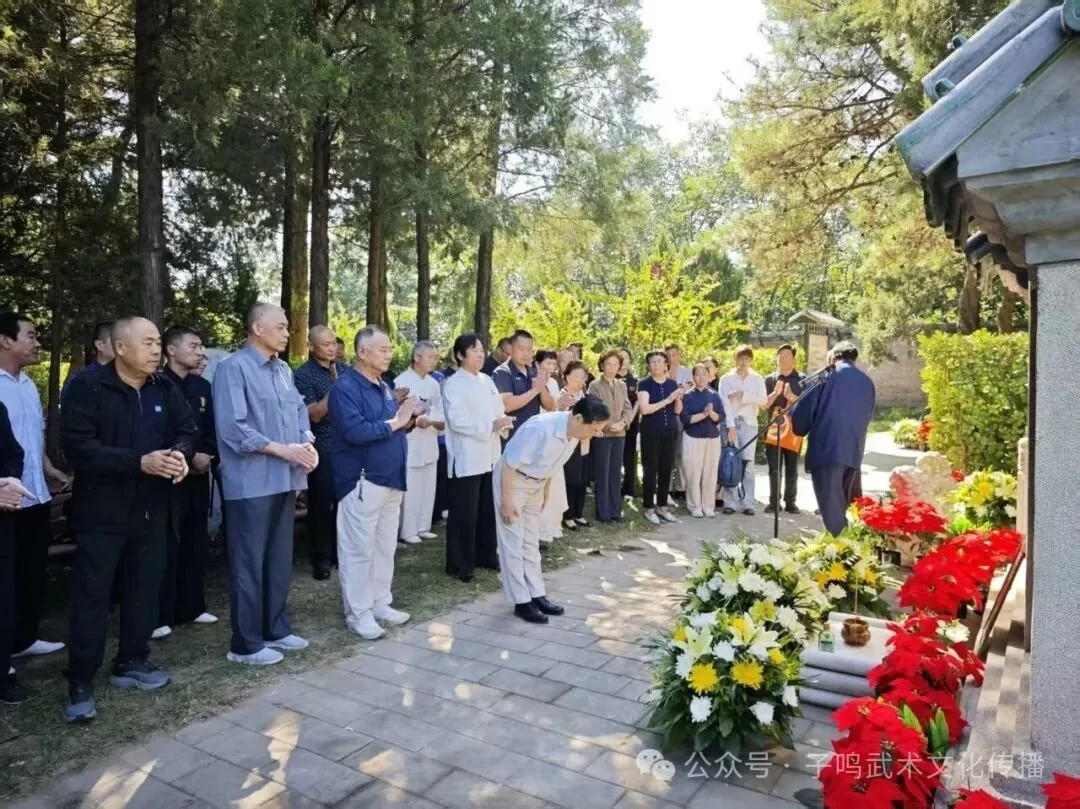
Professor Kang Gewu paying his respects to Dong Haichuan
Before the speeches concluded, more than fifty guests recited words spoken during his lifetime by the third-generation master Li Ziming:
“Bagua Zhang was created by our forebear Dong Haichuan, an outstanding figure in Chinese martial arts. I hope that future generations of martial artists will study it and inherit this precious cultural legacy, contribute to our country and its people, and help rejuvenate China. If that is achieved, my wish will be fulfilled.”
Finally, everyone bowed three times in respect to Dong Haichuan and to the generations of Bagua Zhang masters laid to rest there.
During the ceremony, an honorary certificate was presented to Dong Ruihua, a practitioner and expert in historic architecture who had made a significant, selfless contribution to the restoration. A commemorative banner was also presented to Qianshang Hengyuan Construction Company in recognition of its diligent work, completed to standard and on schedule.
Traditional martial arts depend on transmission from one generation to the next; intangible cultural heritage must likewise be kept alive. After the ceremony, representatives of several Bagua Zhang branches gave demonstrations of forms and weapons: Liu Zhengang for Yin-style Bagua Zhang, Xu Ning for Cheng-style, Li Weijie for Shi-style, Dai Quanfu and Liu Guanlin for Fan-style, and Fu Xiaolin, Dong Jingfeng and Fang Zhongzhi for Liang-style. Their varied performances were an eye-opening experience for those present.
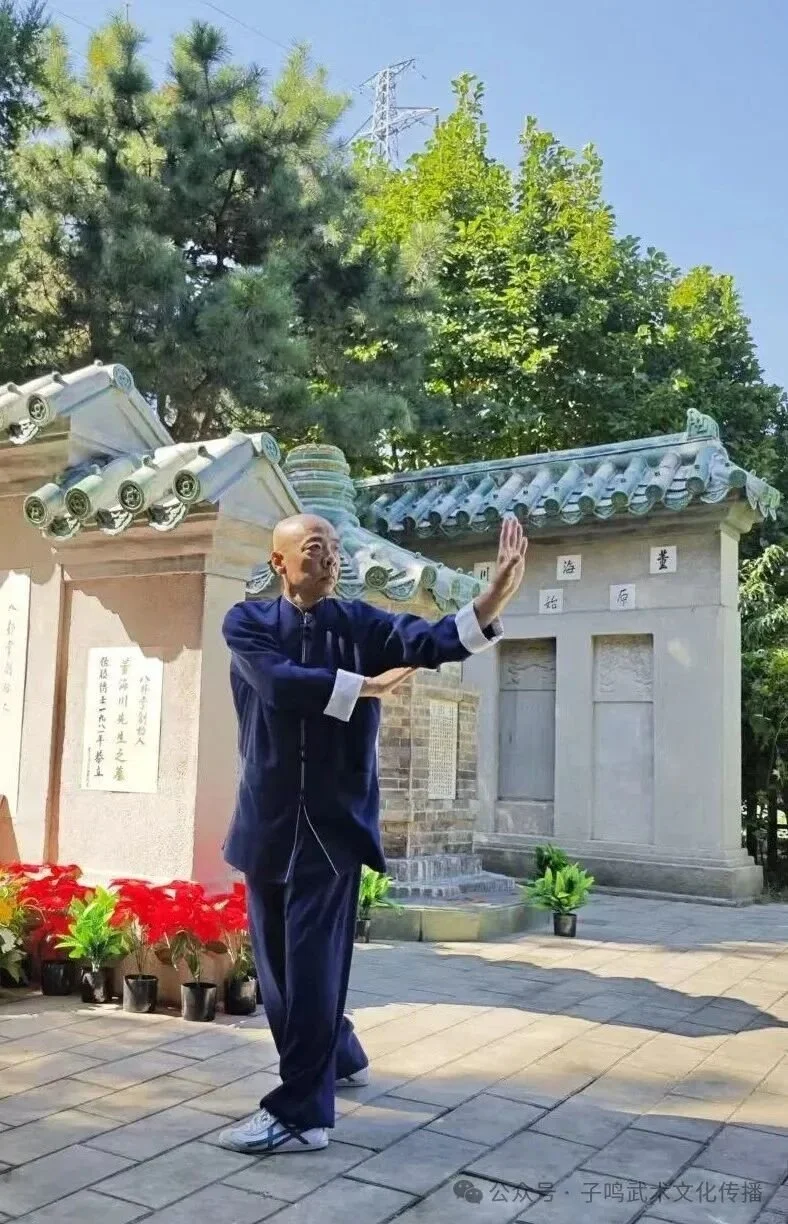
Bagua Zhang demonstration
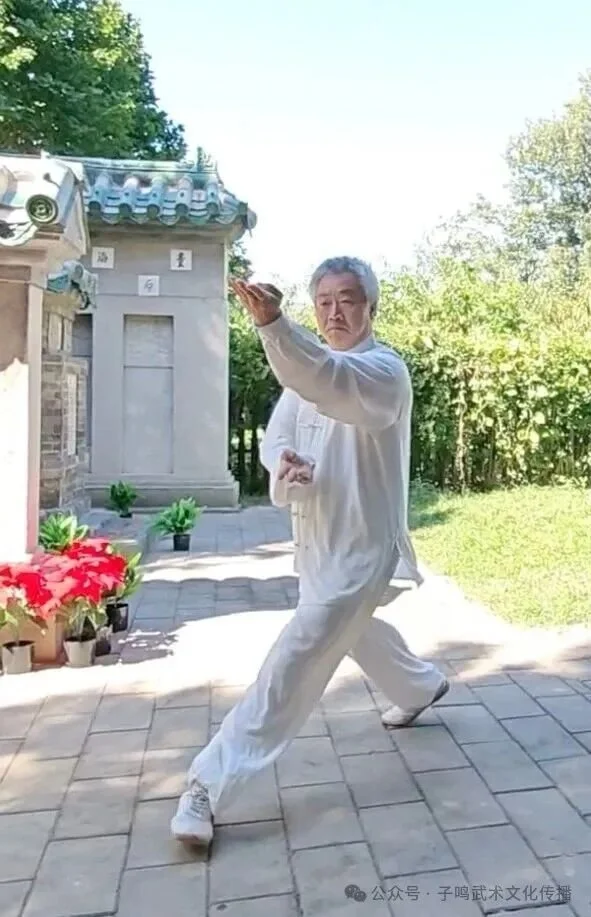
Bagua Zhang demonstration
Restoration work began on 7 September and was substantially completed on 17 September. Over the roughly half-month period, the weather remained sunny and mild. The careful work followed the principle of restoring the old while preserving its original appearance. Its successful completion provides a firm foundation for the commemoration of the 230th anniversary of Dong Haichuan’s birth in 2027 and marks the beginning of those commemorations. Let us look forward together to honouring the founder whose pioneering contribution to Chinese martial arts has benefited generations to come.
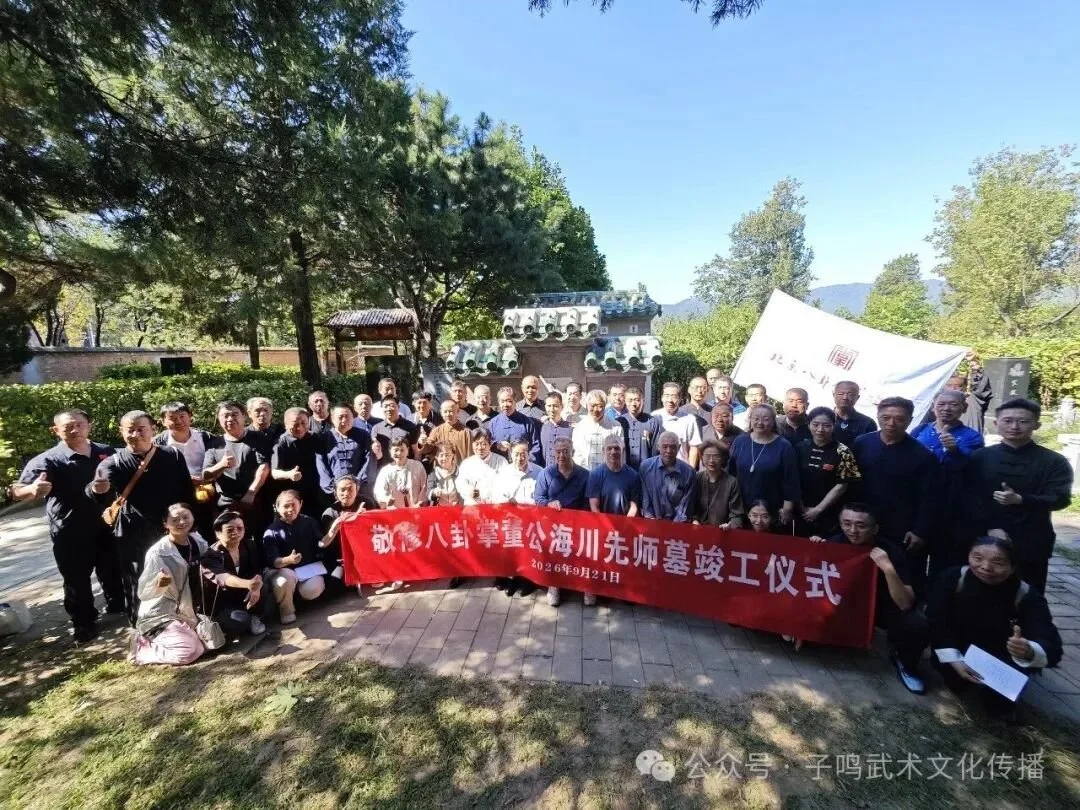
Group photo following the ceremony

Unlock the secrets of one of China’s most revered martial arts with Liang Style Bagua Zhang, Volume One. Written by renowned 4th-generation master Di Guoyong, this guide explores the foundational practices of Bagua Zhang—a martial art known for its circular movements, unique footwork, and profound internal principles.
This volume covers the origins of Bagua Zhang, the development of the Liang style, and the life of its founder Liang Zhenpu, while tracing the art’s evolution through successive generations. Di Guoyong also shares insights from his training under the legendary Li Ziming, offering a rare, firsthand view into the Liang lineage.
Essential techniques are explained clearly, building a solid base for both beginners and experienced practitioners. Key practices for mastering the Liang system are included, along with an in-depth study of the Eight Fixed Posture Palms. Instructions are supported by detailed illustrations and video references to help readers grasp each movement confidently.
Translated, co-authored, and edited by Byron Jacobs, a 5th-generation practitioner, this book delivers traditional knowledge in a modern, accessible format. Whether refining your skills, exploring Bagua’s roots, or deepening your martial understanding, this volume is an essential resource for serious Chinese martial arts practitioners.
The Liang Style Bagua Zhang series is your trusted companion on the path to mastery—offering clarity, structure, and inspiration every step of the way.
NOTE:
Should your country of delivery not display at checkout, please do contact us directly to process your order.
Should you wish to use expedited delivery such as Fedex etc. please do contact us directly to process your order.
Should you want to order more than one copy of the book in a single order, contact us directly to confirm your shipping cost.
Liang Style Bagua Zhang Volume One: Foundational Practices
Discover the foundations of Liang-style Bagua Zhang in this authoritative guide by fourth-generation master Di Guoyong. Covering the art’s history, lineage, essential training methods and Eight Fixed Posture Palms, the book combines detailed instruction, illustrations and supporting video references.
Translated, co-authored and edited by fifth-generation practitioner Byron Jacobs.